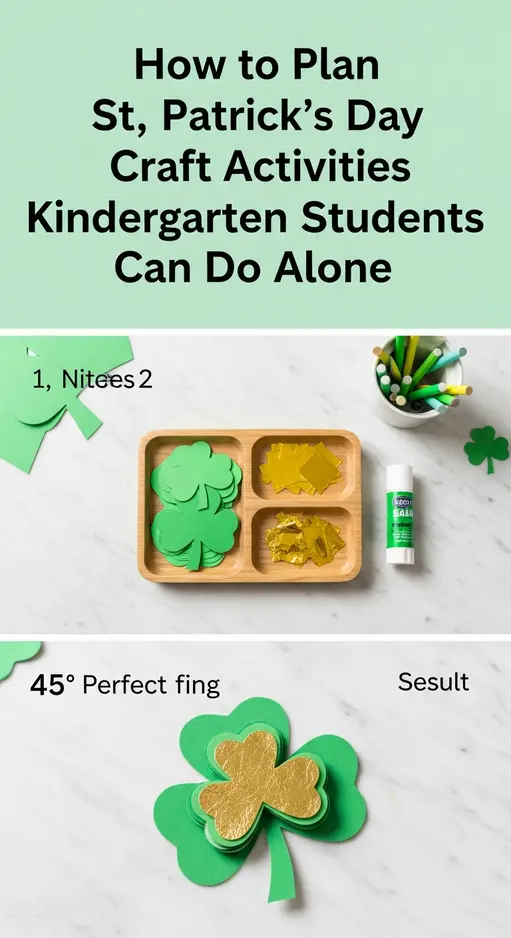
How to Plan St. Patrick’s Day Homeschool Lessons With Fun Craft Activities

Learn how to create st patrick’s day homeschool lesson plans with craft activities using our 10-step STEAM leprechaun trap guide for a magical, mess-free week.
Are you dreading the glitter explosions that usually come with March crafts? I get it. Finding a balance between festive magic and actual learning is tough.
You are probably wondering how to create comprehensive st patrick’s day homeschool lesson plans with engaging hands on craft activities without buying an expensive, pre-made kit. Skip those cheesy, low-quality activities this year.
Instead, let’s build a clever STEAM leprechaun trap using everyday household items. This guide provides exactly 10 idiot-proof steps to a successful engineering project fitting perfectly into your morning basket.
So, if you want st patrick’s day homeschool lesson plans with craft activities that actually work, grab a cardboard box and let’s make some magic.
💥 “My Pinterest Fail”
A few years ago, I tried making a trap using a heavy glass jar and cheap school glue, which resulted in a collapsed mess and a crying toddler. It was a complete disaster that took me hours to scrub off the kitchen table.
But I fixed it by designing this 10-step method using structural cardboard tension and low-temp bonds to ensure the trap actually works on the first try.
- Rule #1: The “Dry-Fit” First Rule: Never glue a moving part (like a trap door) until you have tested the weight of your “gold” bait.
- Rule #2: The Gravity Check: Leprechauns are “fast,” so your trigger mechanism must be top-heavy; always test your stick-prop on a hard surface, not your carpet.
- Rule #3: The “Green-Limit” Strategy: To avoid a muddy mess, provide only three shades of green paint or paper at a time to keep the aesthetic “Pinterest-worthy” and not swamp-colored.
Phase 1: The Blueprint & Foundation
Step 1: Prepare the “Entrance” Cutout
Take your shoe box and carefully cut a 3-inch wide door into the short side.
Ensure the door swings freely on its cardboard hinge to allow for the trigger mechanism later.
Step 2: Reinforce the Base with “Greenery”
Cover the interior and exterior of the box with green construction paper or a quick coat of washable green paint.
Wait exactly 10 minutes for the base layer to set before proceeding so nothing slips.
Step 3: Engineer the “Ladder of Temptation”
Glue small craft sticks horizontally across two vertical wooden skewers to create a tiny ladder.
Allow the glue to dry fully before leaning it against the side of the box.
Phase 2: Building the Trigger Mechanism
This is the pure “Science” portion of the STEAM project, focusing heavily on tension, gravity, and simple machines.
Step 4: Set the “Prop-Stick” Trigger
Use a single wooden skewer to prop the box lid or the side flap open at a 45-degree angle.
Test the balance multiple times to ensure the slightest touch knocks the stick down.
Step 5: Construct the “Rainbow Bridge”
Cut long strips of rainbow construction paper and arch them directly over the trap entrance.
Secure both ends firmly with a dab of low-temp glue or hidden clear tape.
Step 6: Create the “Cloud Cushion”
Pull cotton balls apart with your fingers to make them fluffy, then glue them to the base of the rainbow.
This smart trick masks the “trap” hinges and adds a highly professional touch to the craft.
Phase 3: Irish Charm & The Golden Bait
We finalize the STEAM project with festive, eye-catching details and a meaningful traditional cultural touch.
Step 7: Scatter the “Gold” Path
Create an enticing trail of gold coins or yellow beads leading from the ladder, over the bridge, and deep into the trap.
Space them exactly 1 inch apart to lead the leprechaun right where you want him.
Step 8: Add the “Shamrock Camouflage”
Carefully cut out small paper shamrocks and glue them around the base of the “trigger stick.”
This helps hide the mechanism from the leprechaun’s keen eyes while keeping the project festive.
Step 9: The Final Touch – Attaching the Irish Blessing
Write this beautiful Irish Blessing on a small piece of parchment: “May your pockets be heavy and your heart be light, may good luck pursue you each day and night.”
Roll the paper into a tiny scroll and tuck it into a “secret compartment” or glue it to the back wall of the trap.
Step 10: The “Night Before” Set-Up
Place the finished trap in a quiet, slightly dark corner of your homeschool room or kitchen.
Verify the trigger mechanism one last time by tapping it gently before heading to bed.
Phase 4: Display Magic & Easy Clean-Up
Preservation & Display Instructions: This beautiful trap makes a perfect centerpiece for your St. Patrick’s Day unit study. It can easily be prepped up to 5 days in advance without falling apart. Display it securely on a wooden “Morning Basket” tray to keep all the loose “gold” contained to one area.
Storage Rules: Once the holiday is completely over, gently remove the rainbow and ladder parts. The main box can be recycled, or easily folded flat to store for next year if you used tape instead of glue.
The 5-Minute Clean-Up Hack: To quickly clean up annoying “Glitter or Salt Paint” residue from this project, use a giant piece of Play-Doh or a sticky lint roller to pick up tiny particles from the table instantly.
Now you have a gorgeous, montessori-inspired project that acts as a true unit study in engineering. These low-prep, engaging March homeschool activities are exactly what makes learning at home so memorable for the kids.
As we craft our way through 2026, finding ways to turn basic supplies into pure magic is a total win for busy moms everywhere.
“Thought of you! I found this 10-step leprechaun trap that is actually a STEAM lesson in disguise. May your pockets be heavy and your heart be light—let’s make these with the kids this weekend: [Link]”
Frequently Asked Questions
1. How do I create a St. Patrick’s Day lesson plan for multiple ages?
Pick a single theme like Irish folklore and provide different levels of complexity for each age group. I use a “one-topic” approach where younger kids color while older ones do research. This method works well in 2026 because it saves time and keeps the whole family learning together.
2. What are the best low-prep St. Patrick’s Day crafts for busy homeschooling moms?
Coffee filter shamrocks and paper plate leprechauns are my favorite low-prep projects. I keep a bin of Green Washable Markers and Pipe Cleaners ready for these quick crafts. If you use coffee filters, spray them with water to blend colors without making a big mess.
3. Where can I find free printable St. Patrick’s Day unit studies for kids?
You can find free unit studies on educational blogs and sites like Teachers Pay Teachers. I like to search Pinterest for “free St. Patrick’s Day printables” to find high-quality PDFs. Always check your printer ink levels before starting a big unit study to avoid half-faded pages.
4. How can I teach the history of Saint Patrick in a secular homeschool?
Focus on the historical life of the person and the cultural traditions of Ireland. I treat the lesson like a history project by looking at old maps of Roman Britain. We talk about legends like the snakes as fun folklore rather than focusing on religious aspects.
5. What are some budget-friendly STEM activities for a St. Patrick’s Day theme?
Building a penny bridge with Popsicle Sticks is a cheap and fun STEM challenge. I use Masking Tape for this because it allows the kids to fix their designs quickly if the bridge breaks. You can also use household items like Dish Soap and Honey to make a liquid rainbow.
6. How long should a St. Patrick’s Day homeschool unit study typically last?
A typical St. Patrick’s Day unit study should last about five school days. I usually start on the Monday before the holiday to build up excitement for the celebration. One week is the perfect amount of time to cover history, art, and science without the kids getting bored.
7. What materials do I need for a leprechaun trap STEM project at home?
You need a cardboard box, Green Paint, Construction Paper, and some “gold” bait like pennies. I use a Hot Glue Gun for the box frame and Glue Dots for the smaller decorations. Adding a bit of Gold Glitter or green Felt makes the trap look more inviting for a leprechaun.
8. Can I use Pinterest to organize my St. Patrick’s Day homeschool curriculum effectively?
Yes, Pinterest is a great tool for grouping your ideas into organized subject boards. I make separate sections for “Crafts,” “Science,” and “Worksheets” to find things fast. In 2026, I started using the “Notes” feature on pins to track which supplies I still need to buy.