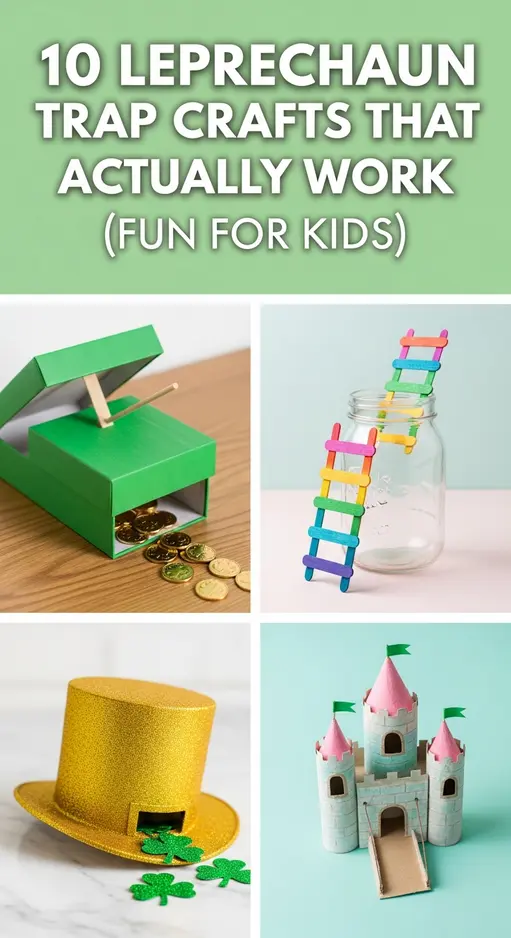
How to Build Easy Leprechaun Crafts Kids Can Make At School

Discover easy leprechaun craft ideas kids can build at school with this 10-step paper plate mask guide. Low-mess, budget-friendly, and classroom-ready!
Let’s talk about that dreaded 15-minute transition window and our collective “glitter-phobia.” Finding seasonal activities that don’t require a $50 Michaels run is a real struggle for busy teachers.
But I have the perfect solution for your March lesson plans. If you need easy leprechaun craft ideas kids can build at school, you are in the right place.
I specifically designed these simple and fun st patricks day leprechaun craft projects for elementary students to make in the classroom to save your sanity. I promise these 10 steps will lead to a mess-free, high-quality result. Your students will actually want to wear these masks home, and you won’t be sweeping up glitter until May!
💥 My Pinterest Fail
A few years ago, I had a Leprechaun Mask Disaster involving wet orange paint that literally turned my classroom floor into a slippery hazard.
To make matters worse, I used flimsy paper plates that immediately collapsed under the weight of a heavy cotton ball beard.
That nightmare is exactly why this updated 2026 tutorial uses a strictly “dry-first” method. I engineered this project to ensure absolutely no one leaves your class with orange hands or a sagging, ruined mask.
- Rule #1: Rule 1: The Pre-Cut Strategy. If you are teaching Kindergarten, pre-cut the center of the plates before the bell rings to save 20 minutes of sheer frustration.
- Rule #2: Rule 2: Glue Stick Supremacy. Avoid liquid glue for the beards because it saturates the plate and causes “the sag.” Stick exclusively to washable glue sticks or heavy-duty glue dots.
- Rule #3: Rule 3: The Assembly Line. Distribute your materials in pre-sorted “kits” (one zip-top bag per student) to completely prevent the dreaded “I don’t have a hat!” chorus.
Phase 1: The Classroom Logistics Dashboard
Setting up the ultimate zero-budget craft station with items you already have hiding in your supply closet.
Setting the sturdy foundation for a cute mask that actually stays on a child’s face without flopping over.
Step 1: Prepare the Plate Base
First, grab your white paper plate and give the center a gentle fold without creasing the thick outer rim.
Pinch and snip a small slit in the middle so your scissors have a place to enter safely. Then, cut outward to remove a 6-inch circle from the center.
Step 2: Create the Orange “Beard” Rim
Take your orange construction paper and tear it into small, one-inch squares for a textured look.
Use your washable glue stick to heavily coat the bottom half of the paper plate rim. Press and stick the orange squares tightly together around the rim.
If you decide to use markers instead, wait 2 minutes to avoid smudging orange ink everywhere.
Step 3: Measure and Cut the Iconic Green Hat
Grab a sheet of green cardstock and cut out a large top hat shape.
Start by cutting a large rectangle for the top, and leave a wider, one-inch strip at the bottom for the brim.
Make sure the base of the hat is slightly wider than the top curve of your paper plate donut.
Step 4: Add the “Gold” Buckle Detail
Cut a thin strip of black cardstock and glue it directly across the hat, resting just above the brim.
Next, cut a small, hollow square out of yellow paper to act as your shiny gold buckle.
Center the yellow square directly over the black band and press it down firmly to secure it.
Phase 3: Texture, Character, and Final Assembly
Bringing the Leprechaun mask to life with fluffy texture, secure handles, and a touch of Irish luck.
Step 5: Secure the Hat to the Plate
Apply a thick layer of glue strictly to the top one-inch edge of your paper plate.
Press the green hat onto the glued edge, making sure it doesn’t drop too low and obscure the eye-hole.
Apply firm pressure for 10 seconds to ensure the cardstock binds securely to the paper plate rim.
Step 6: Fluff and Apply the Cotton Ball Beard
Take your cotton balls and gently pull them apart to stretch the fibers into a realistic, wispy beard texture.
Add small, pea-sized dots of glue directly onto the orange paper rim you created earlier.
Press the fluffed cotton firmly onto the glue dots, layering them lightly so the bright orange color still peeks through.
Step 7: Attach the Handheld “Mask Stick”
Flip the entire mask over carefully so the back side of the plate is facing up.
Grab a large craft stick and line it up vertically along the bottom edge of the plate, resting behind the beard area.
Tape it down securely using two strips of heavy-duty packing tape, leaving enough stick hanging down to act as a handle.
Step 8: The “Pinch Test” for Durability
Instruct the kids to go around the edges of their mask and give a gentle pinch to all the glued parts.
This ensures nothing is loose and gives the glue one last chance to properly bond with the paper plate.
If any cotton or paper wiggles, add a tiny extra dab of glue and press it down for 5 seconds.
Step 9: The Final Touch – Attaching the Irish Blessing
Grab a fine-tip Sharpie and flip the completed mask over one last time to the blank back side.
Write this beautiful, authentic blessing right on the back of the green hat or along the wooden handle:
“May your pockets be heavy and your heart be light, may good luck pursue you each day and night.”
Step 10: The Final Fit Check
Have the students carefully pick up their masks by the wooden handle and hold them up to their faces.
Check the eye-hole alignment to ensure their vision is completely clear and unblocked.
Make sure to gently brush away any stray cotton fibers that might be poking inward toward the sensitive eye area.
Phase 4: Display Magic & Easy Clean-Up
Keeping your classroom spotless and safely storing your new leprechaun creations until the bell rings.
Preservation: These flat paper plate masks can easily be stacked for safekeeping. To keep that cotton ball beard looking perfectly fluffy, absolutely do not place heavy textbooks on top of them.
Storage: If you are making these on a Monday for a fun Friday party, just store them in a single, un-squished layer inside a dedicated “finished work” bin.
The 5-Minute Clean-Up Hack: Give every child a “magic tape loop” by wrapping masking tape sticky-side-out around their hand. Have them aggressively pat their desks to pick up those tiny orange paper scraps and annoying cotton fibers instantly!
Creating these masks is such a wonderful way to build magical classroom memories without losing your mind to prep work. If you need stellar `Saint Patrick’s Day classroom activities` for `preschoolers` this year, this `low-mess` craft is completely undefeated for 2026.
You don’t even need a `printable template` to make these turn out perfectly every single time! Have a fantastic time crafting with your students.
“I found our St. Paddy’s craft! 🍀 It’s low-mess and uses stuff we already have in the bin. Let’s do this Friday: [Link]. ‘May your heart be light!’”
Copy, paste, and text this directly to your teacher bestie or family group chat right now, and don’t forget to pin this post to your Pinterest boards for next year!
Frequently Asked Questions
1. What are the best low mess leprechaun crafts for kindergarteners to do at school?
The best low-mess crafts are ones that use Peel-and-Stick Foam and markers instead of loose glitter or wet paint. I find that using pre-cut shapes and Glue Sticks keeps the classroom clean and easy to manage. For my 2026 classes, I suggest using self-adhesive felt strips for the hats to avoid glue spills.
2. How can teachers make cheap leprechaun traps using only recycled classroom materials?
You can build cheap traps using empty tissue boxes, toilet paper rolls, and scrap Construction Paper. I always raid the recycling bin for egg cartons and plastic bottle caps to act as “gold” bait for the trap. If you don’t have enough boxes, paper bags work well too and can be decorated with crayons.
3. What supplies do I need for a simple paper plate leprechaun craft project?
You need a standard white Paper Plate, orange Paint or yarn for the beard, green paper for the hat, and Googly Eyes. I recommend using Washable Tempera Paint because it dries fast on the plate surface and won’t stain clothes. Try using a Glue Pen for the smaller details to help kids avoid making huge puddles of glue.
4. Are there any easy leprechaun beard crafts that help kids practice fine motor skills?
Yes, a paper chain beard or a “tear and glue” orange paper beard are great for building finger strength and coordination. I love the paper chain method because it makes kids use their finger muscles to loop and link the strips together. You can also use safety scissors to fringe the edges of a paper beard for extra cutting practice.
5. How long does it typically take for a class to finish a leprechaun craft?
Most simple leprechaun crafts take about 20 to 30 minutes for a class of kindergarteners to complete. I always set out materials in individual trays beforehand to save time and prevent the kids from getting bored or restless. If you use wet glue, remember to add ten minutes for drying time before the kids move their work.
6. Where can I find free printable templates for leprechaun hats and beard shapes?
You can find free templates on popular teacher resource sites like Pinterest or by searching Educational Blogs. I often draw my own simple shapes on Cardstock and photocopy them to save money and ensure they are the right size. Just make sure to print on thick paper so the pieces don’t curl when the kids add paint or glue.
7. What are some edible leprechaun themed snacks that kids can assemble in class?
Kids can make “pots of gold” using yellow cereal or “rainbow” fruit skewers with green grapes. I like using Green Sprinkles and sliced cucumbers to keep the theme fun and easy to assemble at a desk. Avoid using sticky honey as glue; use a small dab of Greek Yogurt instead to keep the snack time mess-free and healthy.
8. How do you build a sturdy leprechaun trap using a recycled shoebox and paper?
To build a sturdy trap, use Duct Tape or a Hot Glue Gun to secure the shoebox lid in an open position. I found that taping the corners from the inside makes the structure much stronger for 2026 projects and keeps it from collapsing. If you want it to look cute, wrap the box in Green Butcher Paper before adding your ladders and gold coins.