How to cook tomahawk steak indoors without smoking out the house.

Master how to cook tomahawk steak indoors with our 12-step guide. Achieve a perfect reverse sear without smoke using the right oil and temperature.
Let’s be honest—nothing causes kitchen panic quite like tossing an expensive cut of meat into a hot pan and setting off the smoke alarm symphony. I used to dread the smoky apartment and the lingering smell just as much as you do.
But mastering how to cook tomahawk steak shouldn’t come with a side of stress or a ruined, overcooked dinner. So if you’re wondering How to make a perfect reverse seared tomahawk steak indoors without any smoke, you have found the ultimate No-Smoke Blueprint.
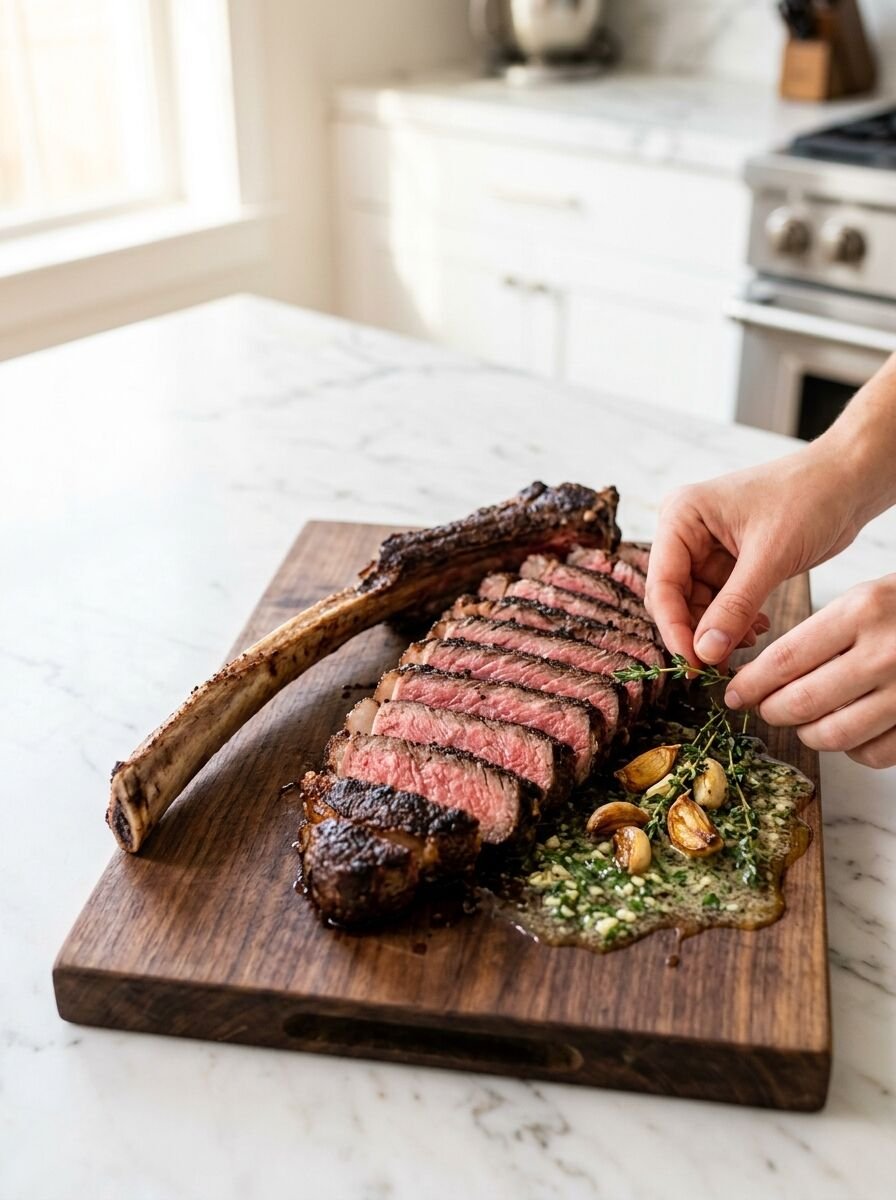
In just 12 precise steps, you will serve a 5-star cowboy steak with a crusty bark and butter-tender center. No outdoor grill required. Let’s get cooking!
- Rule #1: The Moisture Rule: Moisture is the absolute enemy of the Maillard reaction. If the meat isn’t bone-dry, it will steam rather than sear in the pan.
- Rule #2: The Oil Rule: Never use olive oil or butter for the initial high-heat sear. Their smoke points are way too low for the 500°F+ heat required for a tomahawk.
- Rule #3: The Carryover Rule: A giant 3-inch thick steak will rise 5-7 degrees after leaving the pan. You have to pull it early or you will lose that perfect medium-rare center.
Phase 1: The Dry Brine & Prep (Essential Prep Work)
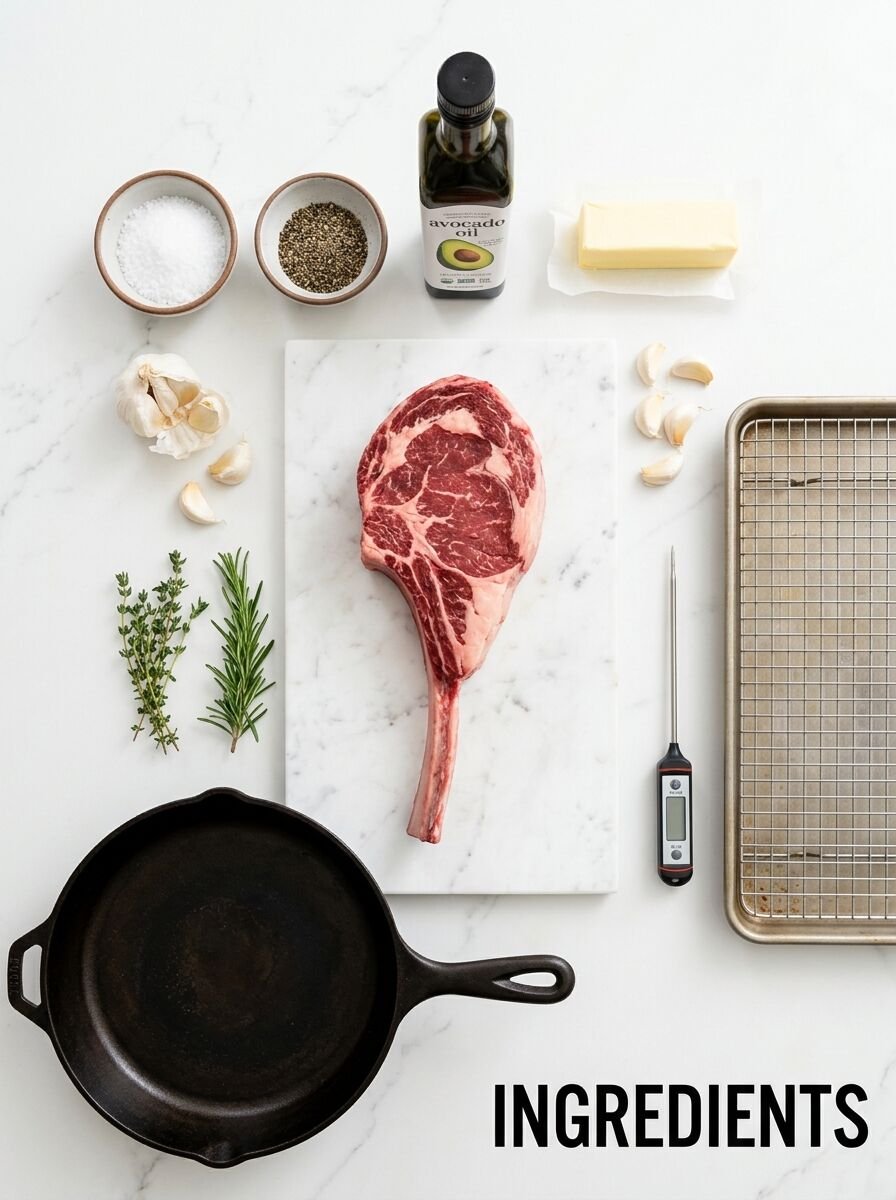
- 1 Tomahawk Steak (2-3 inches thick)
- 2 tbsp Coarse Kosher Salt & 1 tbsp Fresh Cracked Black Pepper
- 2 tbsp Avocado Oil (or Ghee)
- 3 tbsp Unsalted Butter
- 4 Garlic Cloves & 3 sprigs Fresh Thyme/Rosemary
- Digital Meat Thermometer
- 12-inch Cast Iron Skillet
- Wire Cooling Rack & Baking Sheet
Preparing the perfect Maillard reaction begins hours before the heat even touches your heavy cast iron skillet.
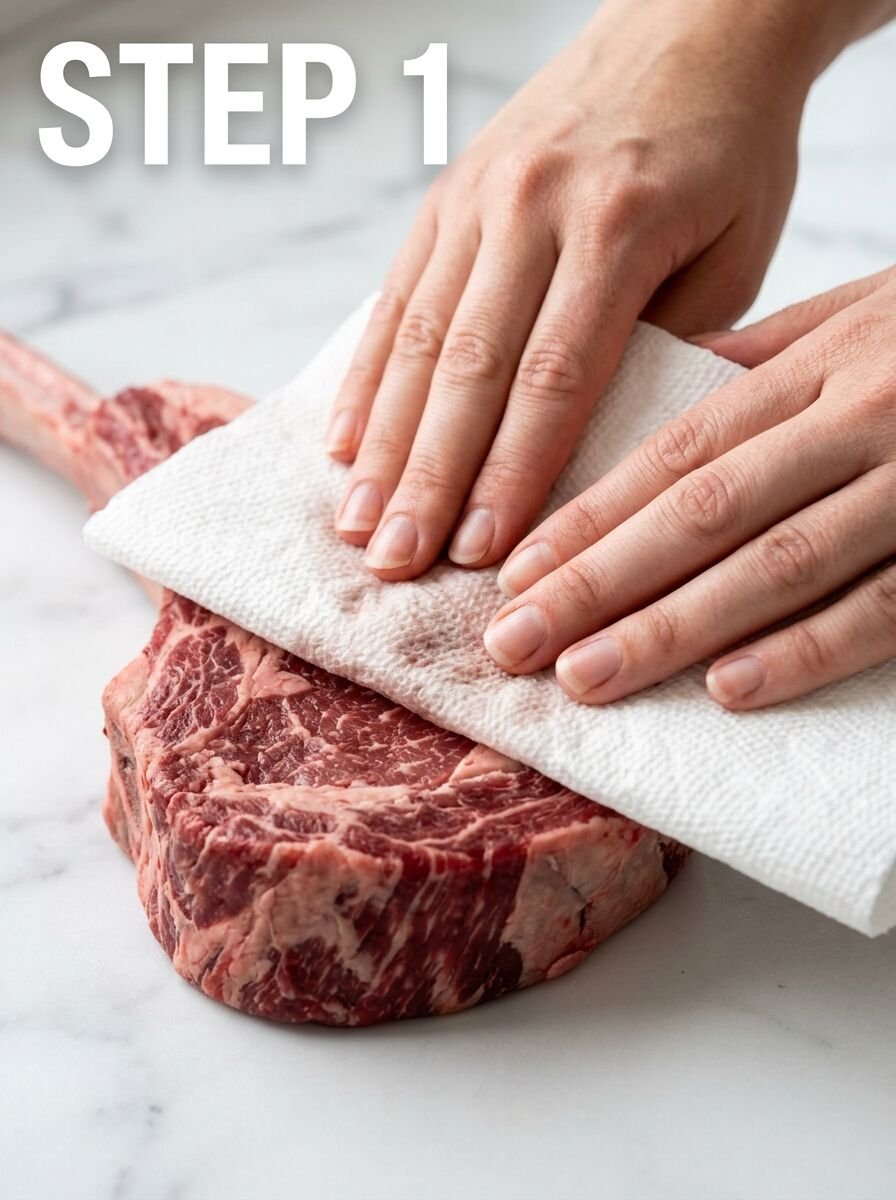
Step 1: The Paper Towel Pat-Down
Completely dry the surface of the 1 Tomahawk Steak using heavy-duty paper towels.
You need to firmly pat every inch, including the long bone, until it stops weeping moisture.
🧑🍳 The Sous-Chef Scale / Hands-On Helper: Kids can help pull the paper towels off the roll and hand them to the chef.
Step 2: Aggressive Seasoning
Apply the 2 tbsp Coarse Kosher Salt and 1 tbsp Fresh Cracked Black Pepper generously from about 12 inches above the meat.
This high-altitude drop ensures perfectly even distribution across the entire surface.
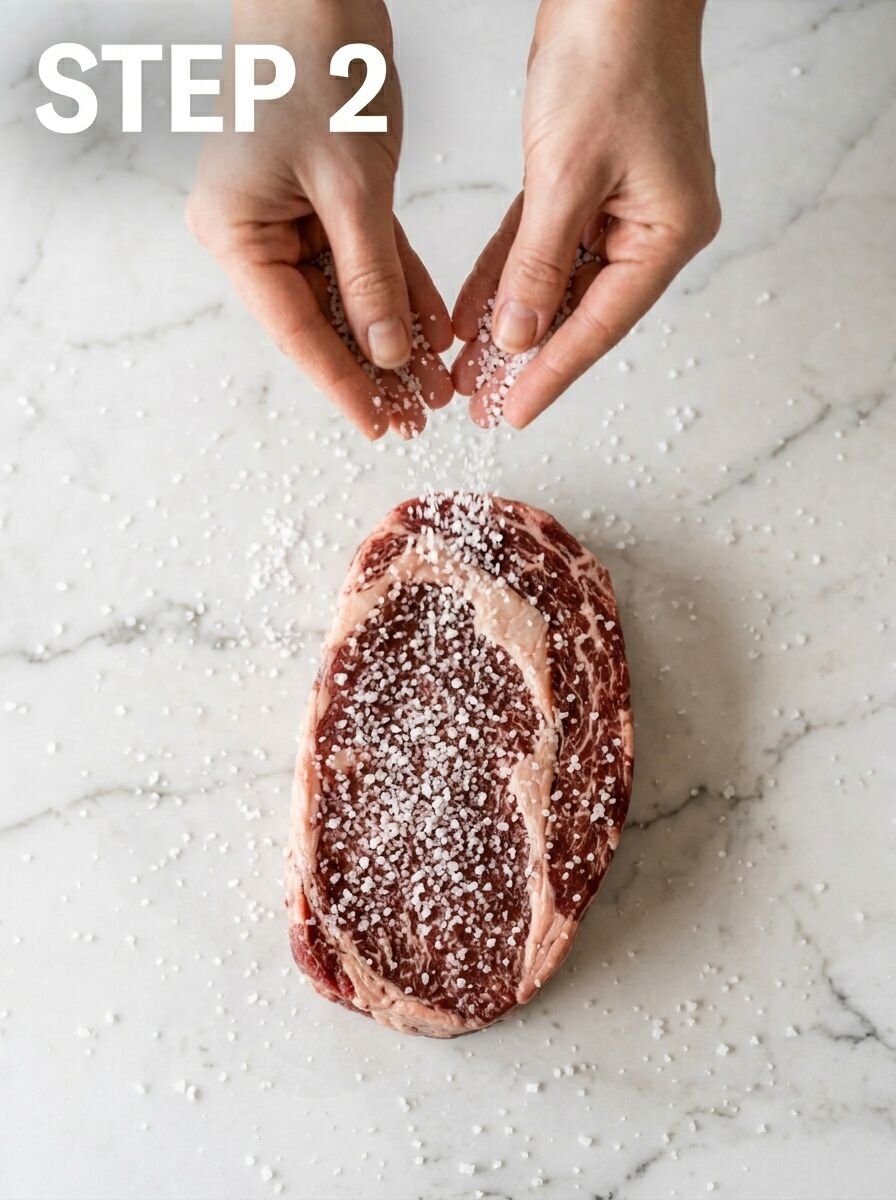
🧑🍳 The Sous-Chef Scale / Hands-On Helper: Let a beginner “rain” the salt down from high up over the cutting board.
Step 3: Room Temperature Alignment
Let the seasoned steak sit on the kitchen counter for exactly 45 minutes.
This allows the chill to drop off the meat before it hits the oven heat.
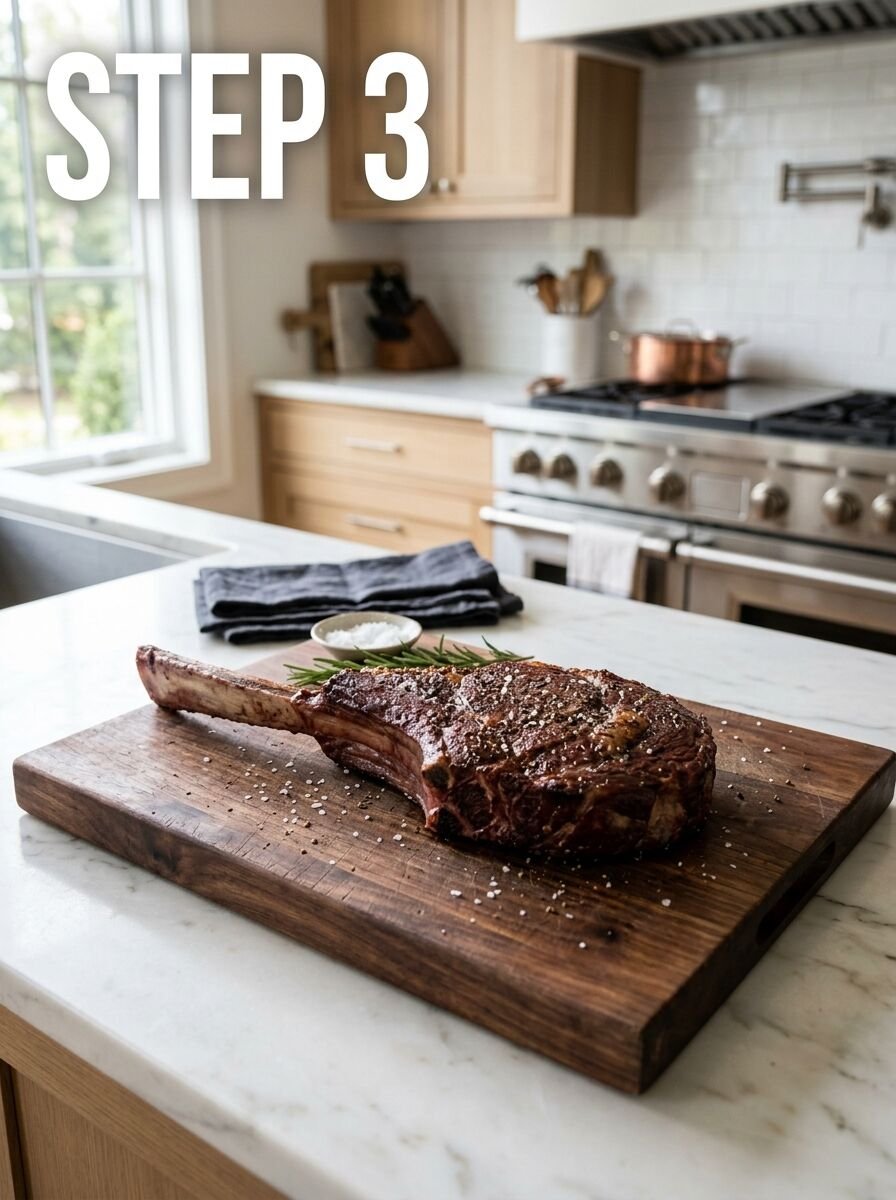
🧑🍳 The Sous-Chef Scale / Hands-On Helper: Let a younger helper set a kitchen timer for the “meat nap.”
Step 4: The Thermometer Probe Placement
Insert your Digital Meat Thermometer into the center of the thickest part of the meat.
You must be very careful to avoid touching the bone with the metal tip.
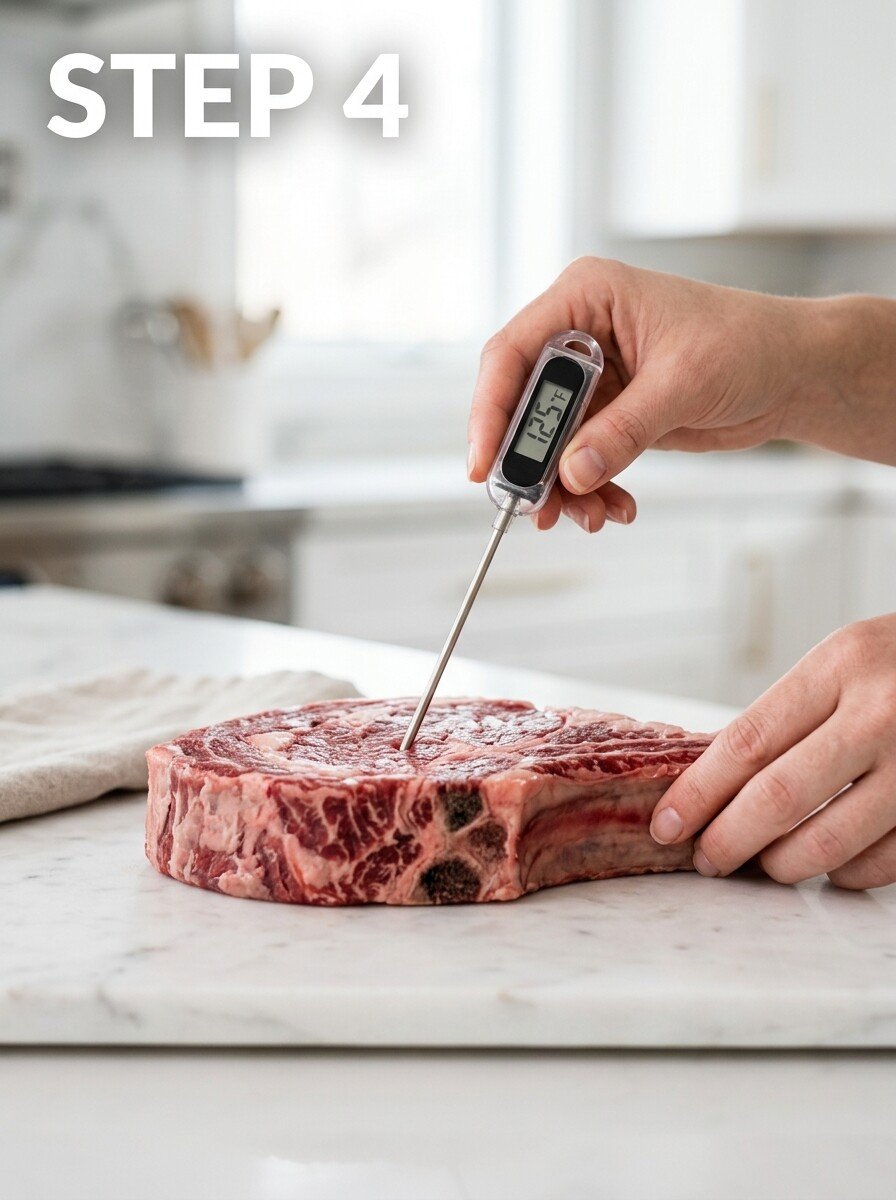
🧑🍳 The Sous-Chef Scale / Hands-On Helper: Perfect for a teenager to practice kitchen precision and safety.
Phase 2: The Low and Slow Roast (Step-by-Step Guide to the Perfect Crust)
This is the bone-in ribeye’s slow journey in the oven using a wire cooling rack to guarantee incredibly even heat distribution.
Step 5: Preheating for Precision
Set your oven to exactly 225°F (107°C) and ensure the metal rack is in the center position.
Wait until the oven is fully preheated before putting the meat inside.
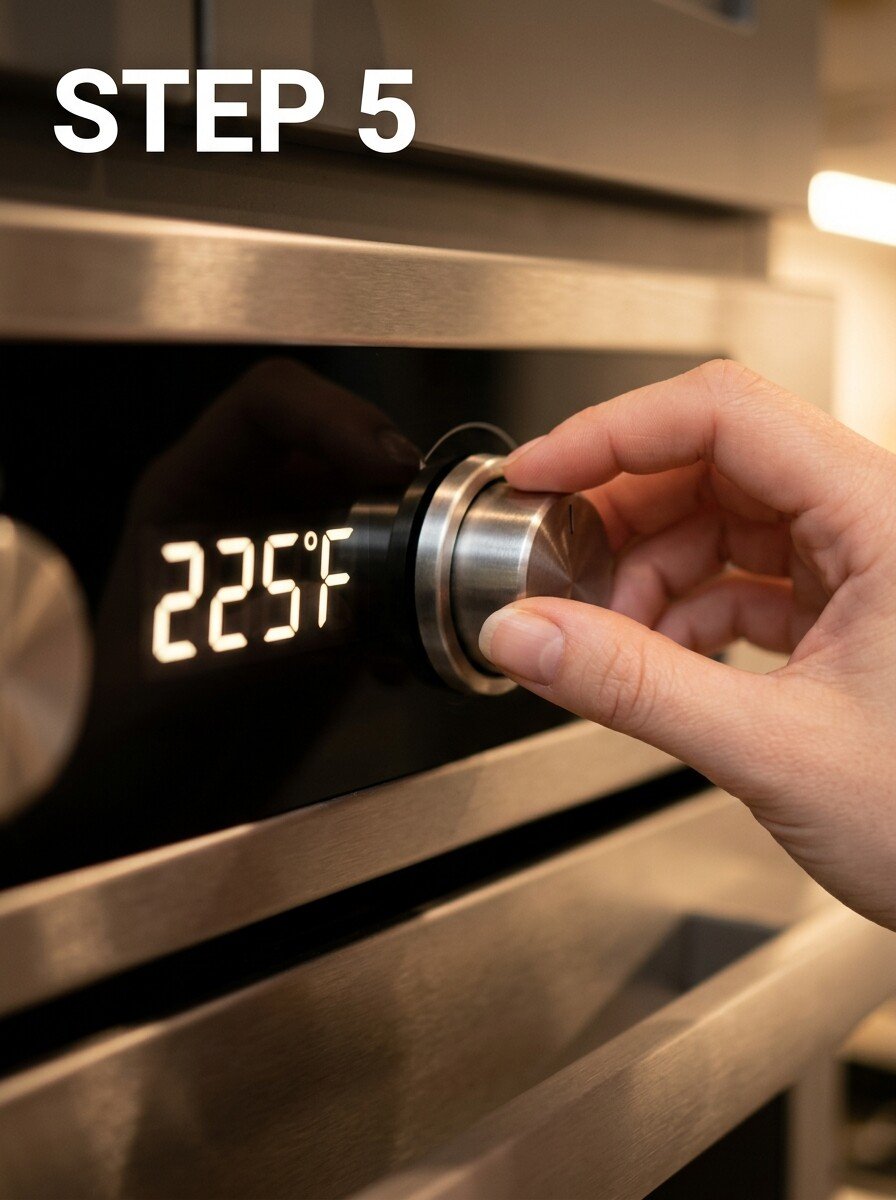
🧑🍳 The Sous-Chef Scale / Hands-On Helper: Let a helper check the digital display to confirm the exact temperature.
Step 6: The Rack Elevation
Place the steak flat on the Wire Cooling Rack positioned over the Baking Sheet.
This setup is non-negotiable for a perfect reverse sear.
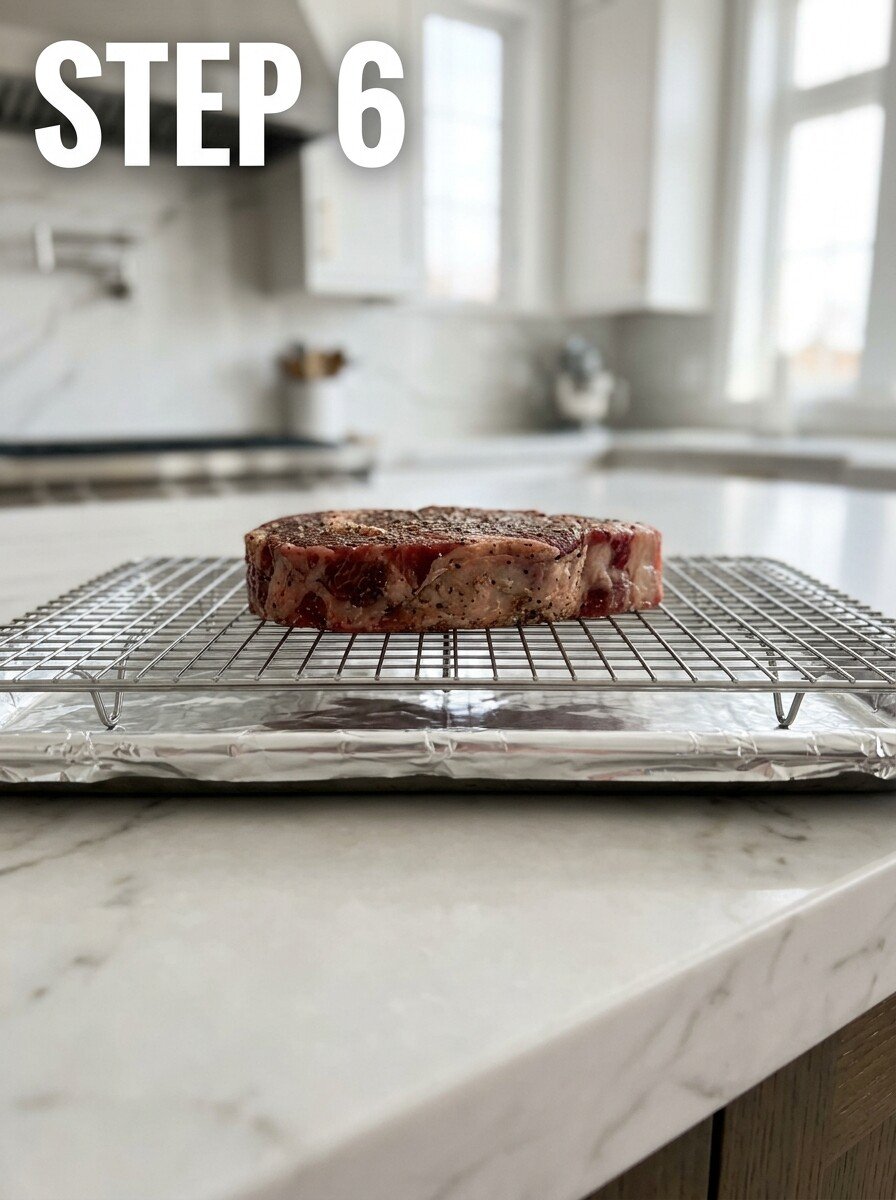
🧑🍳 The Sous-Chef Scale / Hands-On Helper: A beginner can safely help line the baking sheet with foil before the meat goes on.
Step 7: The Slow Ascent
Roast the steak in the oven until the internal temperature hits exactly 115°F for a perfect medium-rare target.
This slow cooking phase usually takes about 60-90 minutes.
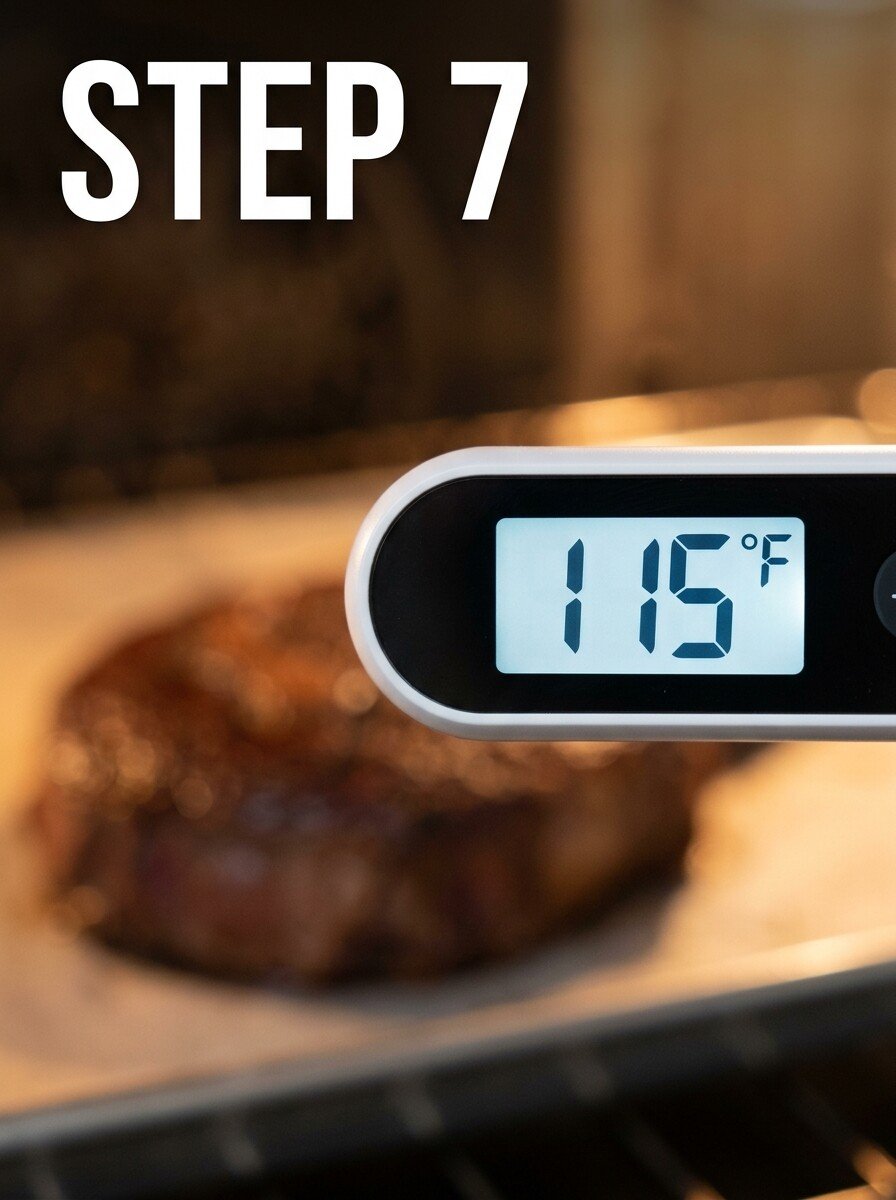
🧑🍳 The Sous-Chef Scale / Hands-On Helper: Have your helper announce the temperature reading through the oven glass every 15 minutes.
Step 8: The Pre-Sear Rest
Remove the steak from the oven and let it sit uncovered on the counter for 10 minutes.
Use this time to prep your skillet and aromatics.
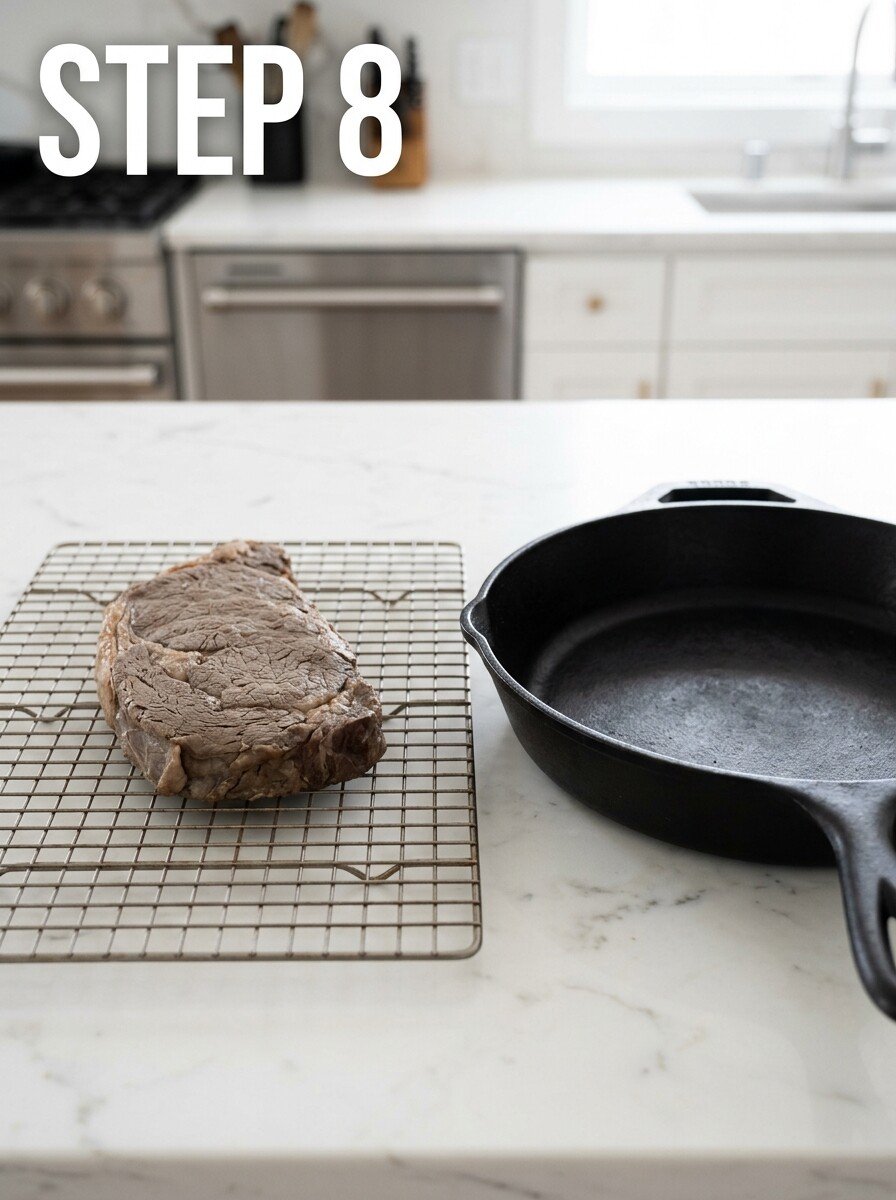
🧑🍳 The Sous-Chef Scale / Hands-On Helper: A beginner can help clear the “prep” dishes to make room for the hot “sear” phase.
Phase 3: The Smoke-Free Finish (The Secret to a Smoke-Free Kitchen)
Now we execute the high-heat finish using avocado oil to achieve a gorgeous Maillard reaction crust without smoking out the house.
Step 9: Skillet Temperature Check
Heat 2 tbsp Avocado Oil in the 12-inch Cast Iron Skillet over high heat on the stove.
Wait until the oil just begins to shimmer and move fluidly around the pan.
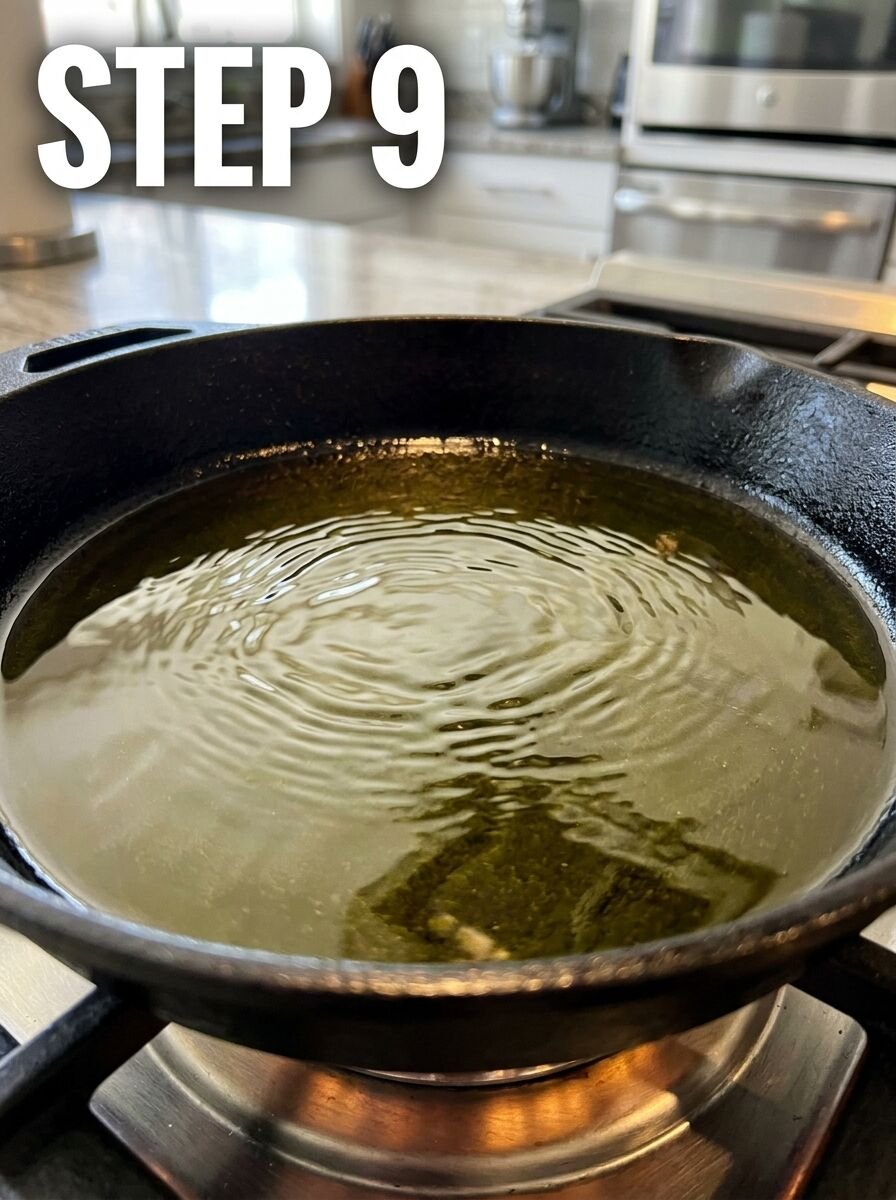
🧑🍳 The Sous-Chef Scale / Hands-On Helper: Keep kids entirely away from the stove during this dangerous high-heat phase.
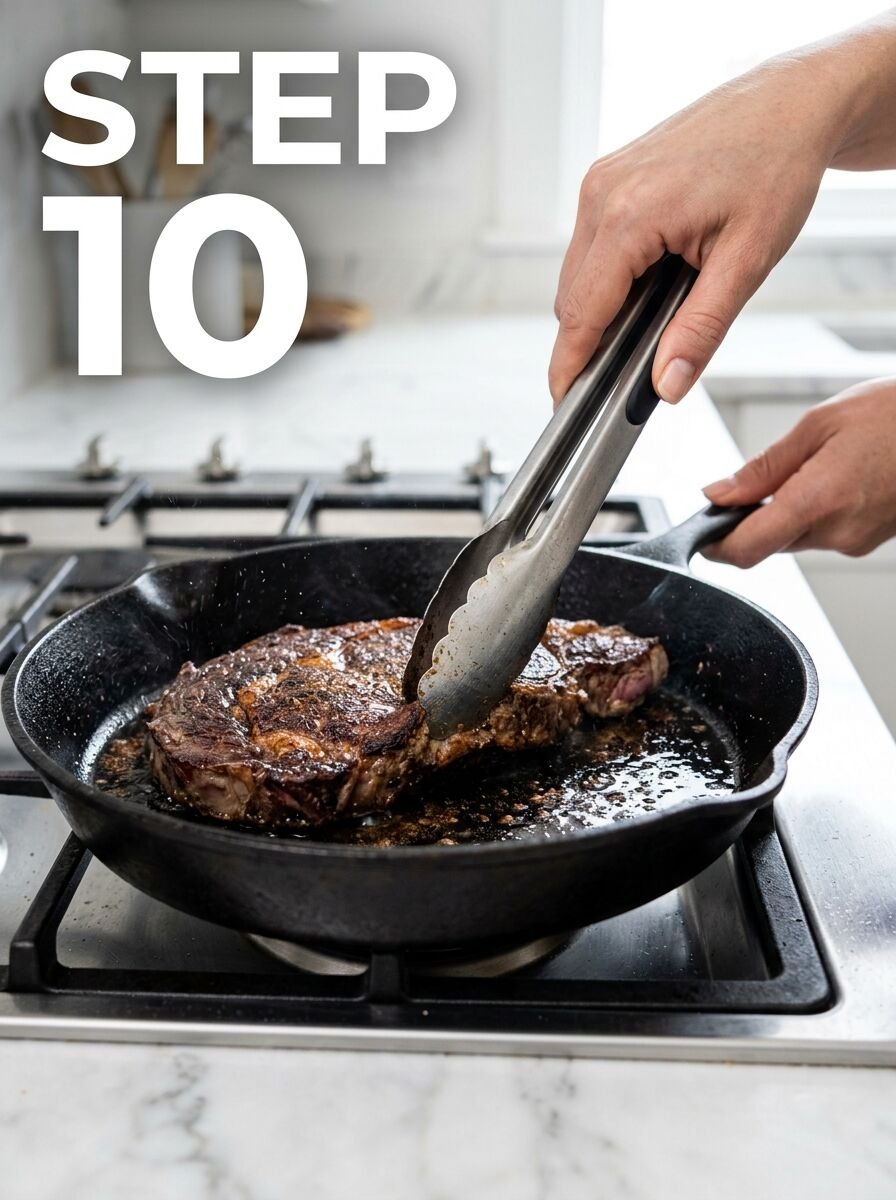
Step 10: The Initial 60-Second Sear
Lay the steak into the hot pan, dropping it away from you to prevent oil splatters.
Press down firmly on the meat with tongs for exactly 60 seconds per side.
🧑🍳 The Sous-Chef Scale / Hands-On Helper: Let them observe the loud sizzling and watch the timer from a very safe distance.
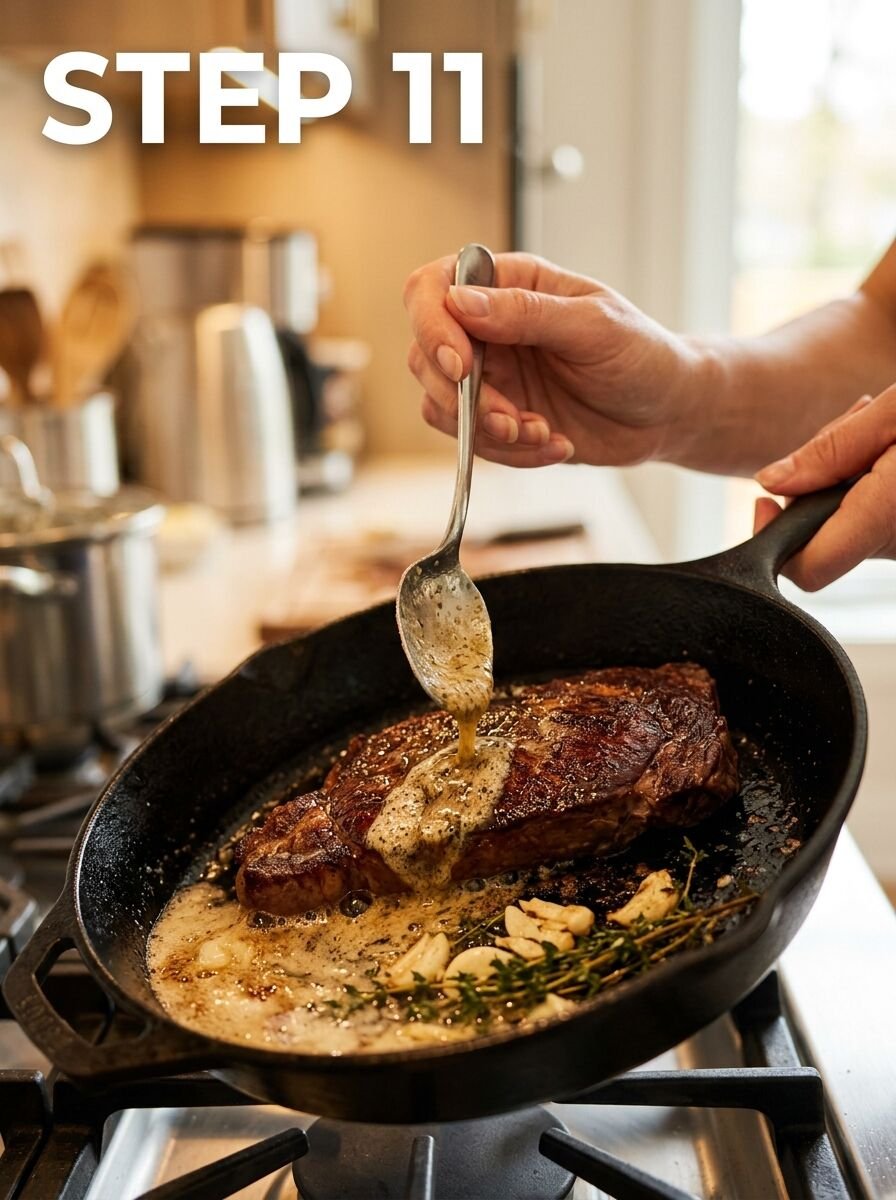
Step 11: The Aromatics & Butter Baste
Lower the stove heat slightly so you don’t burn the dairy.
Add the 3 tbsp Unsalted Butter, 4 Smashed Garlic Cloves, and 3 sprigs Fresh Thyme/Rosemary to the pan.
Tilt the skillet and rapidly spoon the foaming butter over the meat for 30 seconds.
🧑🍳 The Sous-Chef Scale / Hands-On Helper: Perfect for an adult “sous chef” to step in and help with the rapid basting motions.
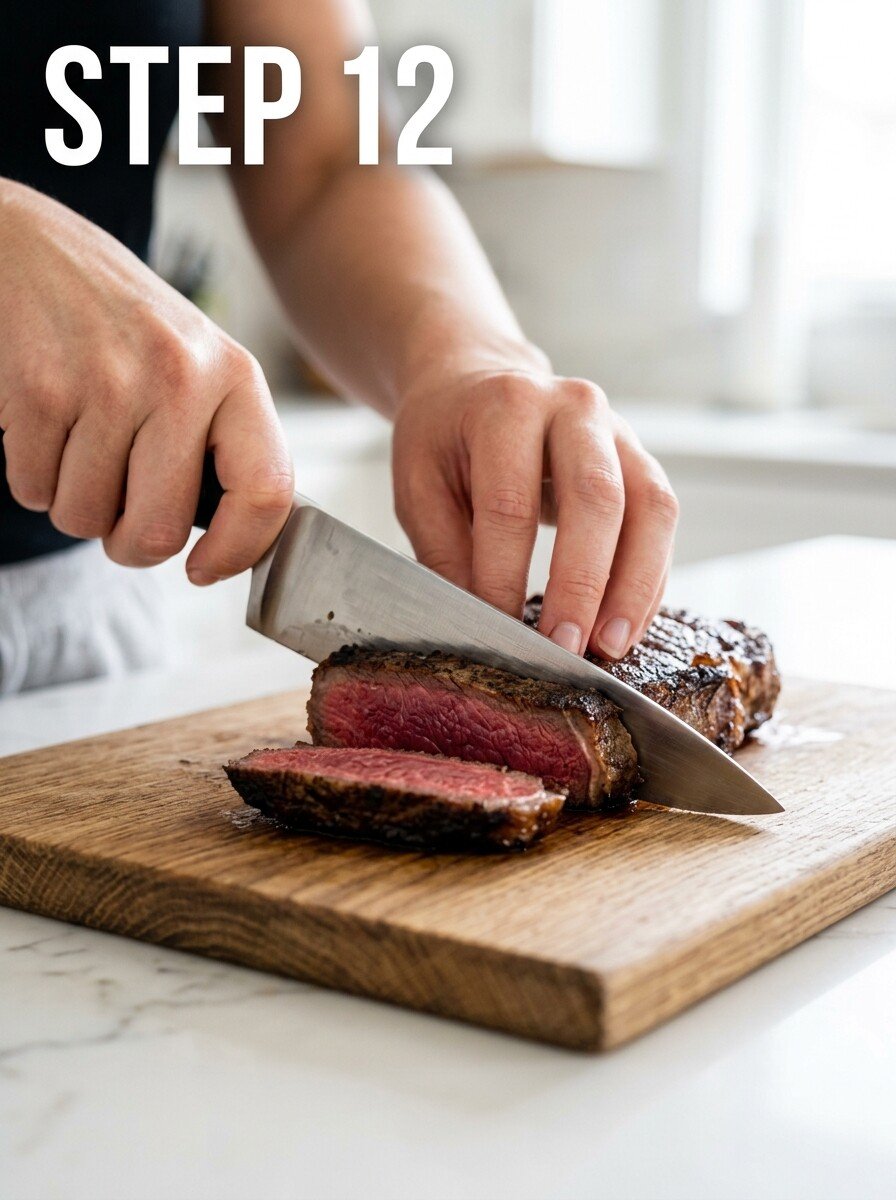
Step 12: The Final Rest & Carve
Transfer the finished steak to a clean cutting board and let it rest undisturbed for 15 minutes.
Slicing into the meat too early will bleed out all the delicious juices.
🧑🍳 The Sous-Chef Scale / Hands-On Helper: Let them help “plate” the beautiful, sliced pieces on a serving platter for a stunning presentation.
Phase 4: Make-Ahead Magic & Leftover Storage
- Make-Ahead Instructions: You can dry-brine (Step 1 and Step 2) up to 24 hours in advance. Store the seasoned meat uncovered in the fridge on a wire rack for the ultimate “dry skin” results.
- Storage Rules: Store any leftover slices in an airtight glass container in the coldest part of your fridge for up to 3 days.
- The 5-Minute Clean-Up Hack: To clean the messy cast iron without harsh scrubbing, pour a cup of coarse salt into the warm pan. Scrub it with a dry paper towel to lift the burnt-on bits without ruining your pan’s seasoning!
Now you know exactly how to pull off the ultimate indoor steakhouse experience. Getting the perfect room temperature prep, ensuring you beautifully render the fat, and mastering that rich marbling without any smoke is entirely possible.
With modern urban living, this brilliant indoor alternative is officially the new gold standard for 2026 home chefs. You never have to compromise on a luxury dinner just because you don’t have backyard grill access.
Don’t lose this foolproof recipe. Tap the bookmark icon in your browser now so you have these steps ready for your next meal, and save this recipe card to your Pinterest boards for next time! Tag me in a photo of your finished dish!
Frequently Asked Questions
1. How long does a cooked tomahawk steak last in the fridge before spoiling?
A cooked Tomahawk Steak lasts for three to four days in the fridge when stored in an airtight container. I always wrap my leftovers tightly in Aluminum Foil to keep them from drying out and absorbing other smells. If the meat feels slimy or has a sour scent, it is time to throw it away.
2. Can I substitute avocado oil for vegetable oil when searing a thick steak?
Yes, Avocado Oil is a perfect substitute for Vegetable Oil because it has an even higher smoke point which is great for searing. In 2026, I use Avocado Oil almost exclusively for my Cast Iron Skillet because it handles high heat without burning. It gives the meat a clean, yummy taste without any heavy grease.
3. Why is my tomahawk steak tough and chewy instead of tender and juicy?
Your Tomahawk Steak is likely tough because it was cooked too fast over high heat or you did not slice it against the grain. This thick cut needs a slow start to break down the fat and muscle. Use a Meat Thermometer to ensure you do not cook it past medium-rare for the best results.
4. How long do you cook a tomahawk steak in the oven at 225?
You should cook a Tomahawk Steak at 225°F for about 45 to 60 minutes until the internal temperature reaches 115°F. This is my favorite 2026 technique for a reverse sear because it creates a perfectly even pink color from edge to edge. Always use a wireless probe so you can track the heat without opening the oven door.
5. Can you freeze a cooked tomahawk steak and reheat it later for dinner?
Yes, you can freeze a cooked Tomahawk Steak for up to three months if you wrap it in plastic and then a layer of foil. I find it is easier to slice the meat off the Bone before freezing to save space in the Freezer. To eat it later, let it thaw in the fridge overnight so the texture stays firm and tasty.
6. What is the best way to reheat a tomahawk steak without overcooking it?
The best way to reheat this steak is in a 250°F oven until it hits 110°F, then finish it with a quick 30-second sear in a hot pan. Do not use the microwave or the meat will become rubbery and gray. I like to add a tiny pat of Butter on top during the last few minutes to keep it moist.
7. Why did my steak smoke so much when I seared it in butter?
Your steak smoked because Butter has milk solids that burn at a much lower temperature than the heat needed for a good sear. I recommend starting your sear with a high-heat oil and only adding the Butter during the last minute of cooking. This “butter basting” method gives you great flavor without a kitchen full of smoke.
8. How long should a tomahawk steak rest before you start slicing into it?
You must let a Tomahawk Steak rest for at least 10 to 15 minutes before you cut into it. This allows the juices to move back into the fibers of the meat so they do not run out on your cutting board. I tent the steak loosely with Aluminum Foil to keep it warm while the internal temperature finishes rising.