How to Make Rainbow Slime Crafts Kids Beg to Make Over and Over

Discover the secret to creative rainbow slime craft ideas kids beg to make again with our foolproof St. Patrick’s Day Pot of Gold guide. Stretchy, vibrant, and mess-aware!
Are you exhausted by the daily “I’m bored” whines and tired of standard toys losing their appeal in five minutes? I completely get it.
But the idea of DIY sensory play often brings up a specific, terrifying fear—slime turning into a permanent brown blob on your favorite rug.
If you are searching for creative rainbow slime craft ideas kids beg to make again, you are in the right place.
I will show you exactly how to make creative rainbow slime craft ideas that kids will want to play with over and over without the mess.
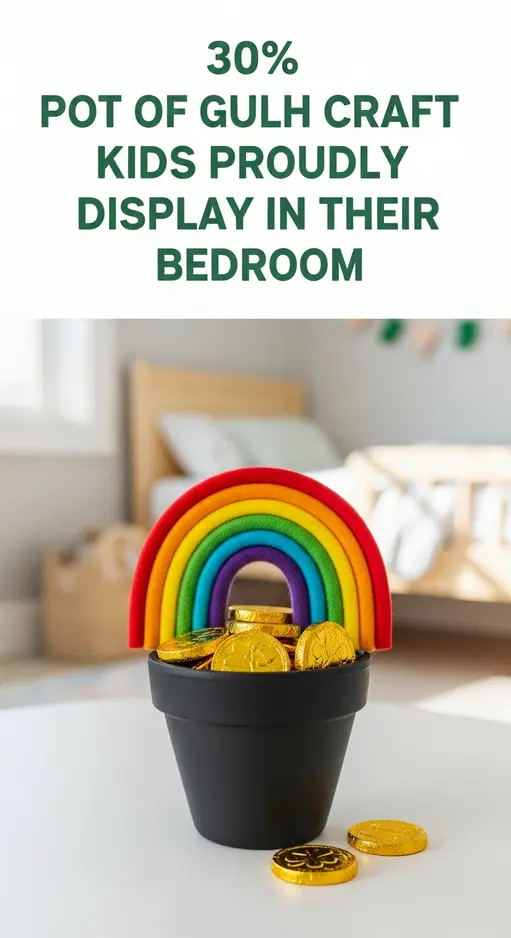
In just 10 foolproof steps, we will create a stunning “Pot of Gold” themed rainbow slime that actually keeps its spectrum vibrant for weeks!
💥 “My Pinterest Fail”
The first time I tried making a St. Patrick’s Day sensory craft, I mixed the dyed batches way too early and used a cheap activator.
It instantly morphed into a swampy, grey mess that looked absolutely nothing like a magical rainbow.
That disaster is exactly why this tutorial relies on a strict “Sectioned Activation” method, ensuring your colors stay separate and your sanity remains intact.
- Rule #1: The “Stay-Separate” Secret: Never mix the colors while the slime is still “under-activated” or sticky; this is exactly when the dyes bleed the most.
- Rule #2: Temperature Matters: Use room-temperature glue because cold glue resists the activator and leads to “rubbery” breaks instead of “stretchy” flows.
- Rule #3: The Vinegar Emergency: Always keep a bottle of white vinegar nearby—it is the ultimate “reset button” that dissolves slime from hair or fabric instantly.
Phase 1: The Base & Activation
Creating the consistent, stretchy foundation for our rainbow spectrum.
⏱️ Total Estimated Time: 15 mins prep + 20 mins active crafting + 10 mins kneading
📊 The Project Snapshot: Yields 6 individual color balls + 1 “Gold” sensory mix-in batch.
💵 The “Real Cost” Breakdown: ~$15.00 total | ~$2.50 per child. Tip: Buy the gallon-sized Elmer’s Glue at big-box retailers like Target to cut costs by 40%.
🚫 Safety & Age Flags: Choking Hazard (Gold Beads), Toddler-Safe (with supervision), Non-Toxic.
🧼 Crafting Mess Level: Moderate (Keep a tray or silicone mat underneath to contain the “sparkle spill”).
📋 Master Tool & Material List:
- Elmer’s White Glue
- Contact Lens Solution (must contain Boric Acid)
- Baking Soda
- Food Coloring (Red, Orange, Yellow, Green, Blue, Purple)
- Gold Glitter
- Yellow Foam Beads
- 6 Small Mixing Bowls
- Spatulas
🔄 The “Supply Bin Swap”: If you lack foam beads, use chopped-up yellow kitchen sponges for the “Gold” texture.
🛠️ The “Equipment Hack”: Use an empty egg carton to hold the different colored slime portions while they “set” to keep them from touching.
Step 1: The Ratio Pour
Combine 1/2 cup Elmer’s Glue and 1/2 cup water in each of the 6 bowls.
Stir for 60 seconds until the mixture is smooth and milky with no streaks.
✅ Structural/Visual Check: The mix should be thin but completely opaque.
💡 Sanity Saver Tip: Use warm water to help the glue dissolve faster and prevent hidden lumps.
🚨 Troubleshooting Check: If it’s too thick, add exactly 1 tablespoon of water and stir again.
🧒 The Assistant Scale: Toddlers can help pour the pre-measured glue into the bowls safely.
Step 2: The Baking Soda Buffer
Add 1/2 teaspoon of Baking Soda to each individual bowl.
Whisk vigorously to ensure there are no clumps, as clumps create “lumpy” slime later.
✅ Structural/Visual Check: The surface should have tiny, fizzy bubbles forming.
💡 Sanity Saver Tip: Measure all your baking soda into a small cup first so you aren’t dipping a wet spoon into the cardboard box.
🚨 Troubleshooting Check: Sift the soda through a mesh kitchen strainer if it’s old and lumpy.
🧒 The Assistant Scale: Preschoolers absolutely love the “whisking” motion and can easily mix the powder.
Step 3: The Slow-Drop Activation
Add 1 tablespoon of Contact Lens Solution to the first bowl.
Stir until the mixture pulls away from the sides of the bowl, then repeat for all 6 bowls.
✅ Structural/Visual Check: It should be stringy and slightly sticky, not a hard rubber ball.
💡 Sanity Saver Tip: Coat your hands in a few drops of baby oil before kneading to prevent it from sticking to your skin.
🚨 Troubleshooting Check: If it’s still “soupy,” add only 1 extra drop of activator at a time.
🧒 The Assistant Scale: Adults only for activator handling to ensure safety and exact measurements.
Phase 2: The Rainbow Spectrum
Infusing the vibrant colors of the Irish rainbow into our sensory dough for maximum visual reward.
Step 4: Pigment Saturation
Add 3-5 drops of food coloring to each bowl, using one hue for each rainbow color.
Knead the color in by hand for exactly 2 minutes per ball until the hue is solid and vibrant.
✅ Structural/Visual Check: Your hands should not be stained if the slime base is activated correctly.
💡 Sanity Saver Tip: Wear disposable kitchen gloves during this step if you are worried about food coloring lingering on your nails.
🚨 Troubleshooting Check: Color looking a bit dull? Add 1 drop of neon dye for extra “pop.”
🧒 The Assistant Scale: Kids love choosing which “rainbow role” they get to color and smash.
Step 5: The “Anti-Bleed” Rest
Place each colored ball into a separate compartment of an empty egg carton or individual jars.
Let sit for 5 minutes completely undisturbed on the counter.
This allows the chemical bonds to finish cross-linking, preventing colors from mixing instantly later.
✅ Structural/Visual Check: The slime should look glossy, smooth, and slightly flattened.
💡 Sanity Saver Tip: Set a physical timer on your phone so you don’t rush this crucial resting period.
🚨 Troubleshooting Check: If the balls are “melting” into each other, your resting containers are too small.
🧒 The Assistant Scale: Great time for a quick snack break while the “science works” its magic.
Step 6: Texture Infusion
Stretch the yellow slime ball and pour 2 tablespoons of gold glitter and 1/4 cup yellow foam beads into the center.
Fold the slime over the “gold” repeatedly to lock the texture pieces inside the dough.
✅ Structural/Visual Check: The beads should stay firmly inside the slime and not fall out onto the table.
💡 Sanity Saver Tip: Do this step over a baking sheet with a lip to catch any rogue foam beads before they hit the floor.
🚨 Troubleshooting Check: Beads popping out constantly? Add a tiny dab of raw glue to increase the “tackiness” of the slime.
🧒 The Assistant Scale: This is the most “sensory satisfying” step for elementary-aged kids to squish.
Phase 3: The St. Paddy’s Transformation
Constructing the final rainbow bridge to the pot of gold using our vibrant, resting slime colors.
Step 7: The Parallel Stretch
Line the 6 colors up in order from red to purple on a clean, flat surface.
Stretch them into long “snakes” about 10 inches long and lay them side-by-side so they touch but don’t overlap.
✅ Structural/Visual Check: The lines should be completely even in thickness across the board.
💡 Sanity Saver Tip: Slightly dampen the table surface with water to keep the slime from sticking while you roll it.
🚨 Troubleshooting Check: If one color is runnier than the others, knead it with a single drop of activator before lining it up.
🧒 The Assistant Scale: Perfect for kids to practice their “playdough snake” rolling skills independently.
Step 8: The Great Swirl
Gently twist the 6 strands together holding both ends, but only twist twice.
Do not over-mix! The goal is a “spectrum swirl” where every individual color is still distinct and bright.
✅ Structural/Visual Check: You should see clear, vibrant lines of every single rainbow color running down the length.
💡 Sanity Saver Tip: Pull gently from the ends to elongate the swirl without squishing the colors inward.
🚨 Troubleshooting Check: If it starts turning purple or brown, stop twisting immediately!
🧒 The Assistant Scale: Let the child carefully perform the “Giant Twist” under your watchful eye.
Phase 4: The Final Touch & Blessing
Adding the intentional, sentimental layer to the craft before final display.
Step 9: The Final Touch – Attaching the Irish Blessing
To turn this from a “mess” into a “meaningful gift,” print or handwrite an authentic Irish blessing on a beautiful tag.
Use this exact phrase: “May your pockets be heavy and your heart be light, may good luck pursue you each day and night.”
Laminate the note or use a fine-tip Sharpie to write it firmly on the lid of your storage jar before gifting.
✅ Structural/Visual Check: The tag should be clear, legible, and firmly attached so it won’t fall off during play.
💡 Sanity Saver Tip: Cover the paper tag with a piece of clear packing tape if you don’t own a fancy laminator.
🚨 Troubleshooting Check: If the ink smears on the plastic lid, wipe it with rubbing alcohol and try a permanent oil-based marker instead.
🧒 The Assistant Scale: Ask the child to proudly sign their name on the back of the “Blessing Tag.”
Step 10: The “Pot of Gold” Landing
Place the textured “Gold” slime (from Step 6) at the very end of your rainbow swirl right before placing it in the jar.
Press it down firmly so it looks like the gorgeous rainbow is magically emerging straight from the gold pile.
✅ Structural/Visual Check: The two slimes should hold together perfectly when lifted as one piece.
💡 Sanity Saver Tip: Give the gold slime a slight squeeze to create a “bowl” shape for the rainbow to rest inside.
🚨 Troubleshooting Check: If they won’t stick together, lightly “score” the edges with a plastic knife to create grip.
🧒 The Assistant Scale: The child can “hide” a small plastic gold coin inside the gold slime for a fun surprise later.
Phase 5: Display Magic & Easy Clean-Up
Preservation & Display: Store your vibrant creation in airtight plastic containers or glass mason jars to prevent drying out.
Keep the jars displayed proudly on a cool, dark shelf away from direct windows or heat sources.
Storage Rules: This specific recipe will last 3-4 weeks if not over-handled by dirty hands.
Do not leave it in a hot car, or the “Pot of Gold” foam beads will melt and sink straight to the bottom.
The 5-Minute Clean-Up Hack: If slime gets stuck on the craft table, take a “sacrificial” ball of the same slime and dab it rapidly over the bits left behind.
The slime will actually bond to itself instantly and lift the mess right up without endless scrubbing!
Even if your kids end up mixing all the colors together eventually, this washable, vibrant recipe remains a fantastic tool for sensory play.
The simple act of kneading this spectrum sensory dough provides incredible, calming tactile input that beats any screen time.
As we move through 2026, finding hands-on activities that actually hold a child’s attention is more valuable than ever.
Copy and paste this message to your favorite mom friend or family group chat right now so you can plan a playdate! Don’t forget to pin this post to your St. Patrick’s Day Pinterest boards for next year.
“Thought of you! Let’s make this with the kids this weekend: [Link]. May your pockets be heavy and your heart be light this St. Paddy’s Day! 🌈🍀”
Frequently Asked Questions
1. How do you keep rainbow slime colors from mixing into brown during play?
Keep colors from mixing by stretching the slime side-by-side instead of folding different colors directly over each other. I found that keeping each color section thick prevents them from blending into a muddy brown too fast during your craft session.
2. What is the best borax free recipe for making rainbow slime with kids?
The best Borax-free recipe uses Elmer’s School Glue and contact lens solution that contains boric acid. In 2026, I recommend using a plant-based thickening agent if you want a more natural option that is still fun for kids to pull and stretch.
3. How can I make rainbow slime less sticky without adding more activator solution?
You can fix sticky slime by rubbing a tiny bit of baby oil or lotion onto your hands before picking it up. I like this trick because it keeps the slime soft and stretchy without making it stiff or rubbery like extra activator often does.
4. What are the best storage containers to keep rainbow slime fresh for weeks?
Airtight plastic containers or glass jars with rubber seals are the best options for long-term storage. For 2026, I started using reusable silicone bags because they keep air out better than cheap plastic bins and save a lot of space.
5. Can you make edible rainbow slime that is safe for toddlers to taste?
Yes, you can make edible slime using melted marshmallows, cornstarch, and a little coconut oil. I use natural fruit juices for the coloring to keep it totally non-toxic and safe if a toddler decides to take a small bite.
6. How much food coloring do I need for vibrant rainbow slime craft projects?
Use two to three drops of concentrated gel food coloring per cup of slime for the brightest results. I find that liquid dyes make the slime too runny, so I always use gel to keep the texture perfect and the colors bold.
7. What is the secret ingredient to making fluffy rainbow cloud slime at home?
The secret ingredient for fluffy cloud slime is adding Instant Snow powder to your finished slime base. I mix the powder with a tiny bit of water first to get that famous drizzly cloud texture that kids love to play with.
8. How long does DIY rainbow slime typically last before it needs to be replaced?
Most DIY slime lasts about two to four weeks when kept in a cool, dry place inside an airtight container. I check my slime for any changes in smell or texture every week and make a new batch if it starts to get hard.