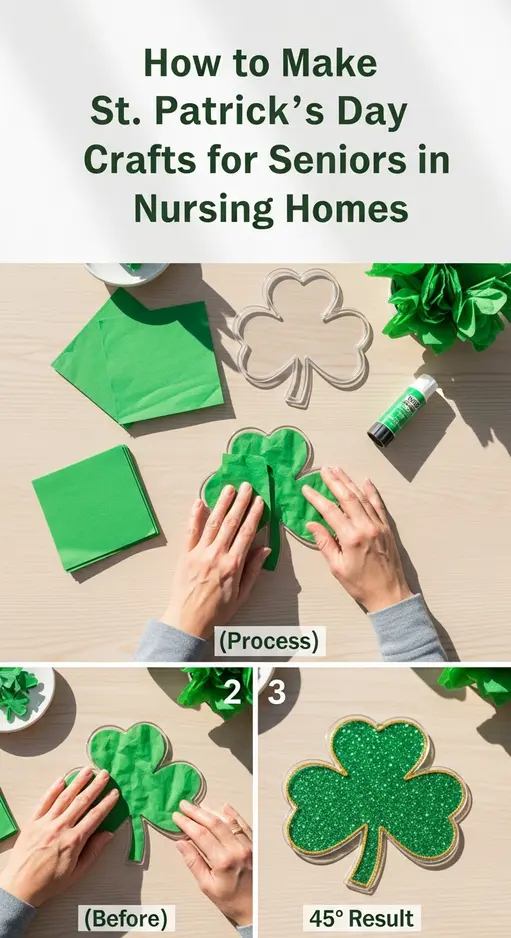
How to Make St. Patrick’s Day Paper Crafts Without Using Glue

Master 10 genius st patrick’s day paper crafts for kids without glue. These mess-free, “engineering-style” holiday projects are perfect for busy parents.

If you are tired of scrubbing dried craft residue off your dining table, you need these st patrick’s day paper crafts for kids without glue. I completely abandoned traditional messy holiday activities this year. Now, I exclusively look for easy st patrick’s day paper crafts for kids to make at home without using any glue.

We all know the sheer panic of a toddler wielding a glitter shaker and a dripping bottle of liquid adhesive. That sticky residue ruins clothes, floors, and your sanity.

Instead, welcome to the “dry-assembly” revolution. Today, I will walk you through exactly 10 logical steps to complete the ultimate “No-Glue Shamrock & Rainbow Engineering” project. You get all the cute holiday memories with zero sticky mess!

Last spring, my “simple” toddler craft turned into a massive glue-tastrophe. Liquid glue soaked straight through our thin construction paper, tearing the clover and permanently bonding a rogue green sequin to my mahogany dining table. That sticky disaster is exactly why I invented this dry “notched and stapled” method. I desperately needed a craft that actually stays in one piece without ruining my furniture.

🏆 The 3 Golden Rules for Crafting Success
  • Rule #1: The Crease is King: Without glue, your structural integrity relies on sharp, firm folds. Use your thumbnail or a ruler to tightly press every single folded edge.
  • Rule #2: Cardstock is Your Best Friend: Flimsy standard paper just won’t work here. You need 65lb cardstock to provide the “tension” required for slot-and-tab connections.
  • Rule #3: Measure Twice, Snip Once: Because we are literally “locking” paper into paper, notches must be cut exactly to the halfway point. Snip any further, and your 3D shamrock will completely flop!

Phase 1: The Precision Cut & Notch Prep

⏱️ Total Estimated Time: 5 mins prep + 20 mins active crafting + 0 mins drying.
📊 The Project Snapshot: Yields 1 3D Standing Shamrock and a 3-foot Rainbow Chain.
💵 The “Real Cost” Breakdown: ~$2.00 total | approx. $0.20 per child. Tip: Buy multi-packs of green cardstock at the Dollar Tree to save 60% over big-box craft stores.
🚫 Safety & Age Flags: Toddler-Safe (with pre-cut notches), Scissor-Skills Practice (Ages 5+), Stapler Supervision Required.
🧼 Mess Level: Mess-Free Magic (Zero liquids, zero powders).
📋
  • Green Cardstock (Dark and Light)
  • Rainbow Color Paper Strips
  • Safety Scissors
  • Stapler
  • Washi Tape (Optional for hanging)
  • 🔄 🛠️ Setting the foundation for glue-free stability by preparing your clever “interlocking” paper pieces.

    Step 1: Trace and Cut Your Four Hearts

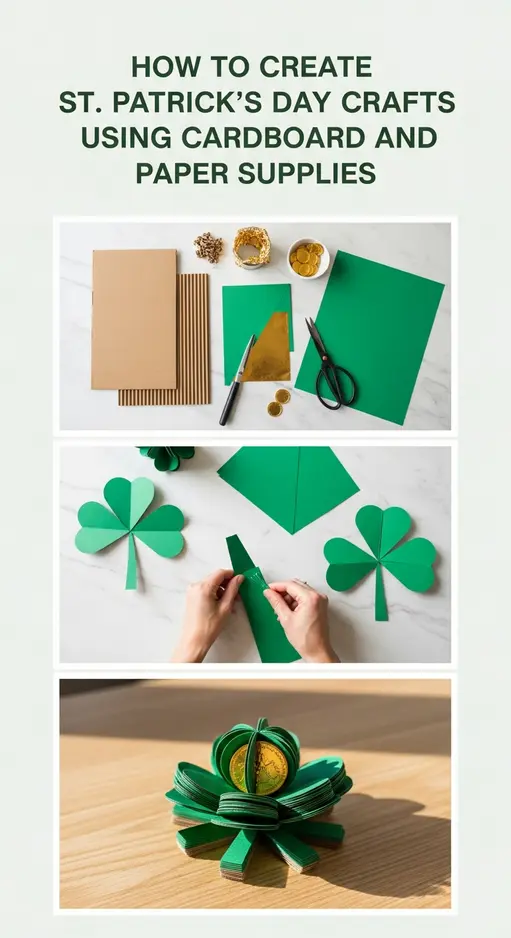
    Start by helping your child cut four identical heart shapes out of green cardstock. Ensure all four hearts are the exact same size so your final 3D clover stays perfectly balanced.

    📸 Photo Required Here: Overhead shot of four green hearts laid out perfectly on a clean, white surface.
    ✅ Structural/Visual Check: The hearts should be completely symmetrical when folded in half.
    💡 Sanity Saver Tip: Create one perfect “master template” heart from an old cereal box for the kids to trace around!
    🚨 Troubleshooting Check: If the hearts are wildly uneven, the shamrock will lean and tip over. Trim the edges to match immediately!
    🧒 The Assistant Scale: Toddlers can pick out their favorite shades of green paper, while kids 5 and up can independently trace the template.
    Neenah Astrobrights 65lb Green CardstockBuy on AmazonWhy you need this: The 65lb weight provides the exact structural tension needed so your interlocking shamrock won’t collapse under its own weight.

    Step 2: Creating the Center Slot

    On two of your green hearts, snip a 1-inch vertical slit right down the top center cleavage. On the remaining two hearts, snip a 1-inch vertical slit from the bottom point going directly upward.

    📸 Photo Required Here: Close-up of safety scissors cutting exactly halfway into the green heart shape.
    ✅ Structural/Visual Check: Your cut lines should stop exactly in the dead center of the heart shape.
    💡 Sanity Saver Tip: Draw a faint pencil dot in the center of the heart so your child knows exactly where to stop cutting.
    🚨 Troubleshooting Check: If you accidentally cut past the center, the paper will tear during assembly. Grab a fresh piece of cardstock and try again!
    🧒 The Assistant Scale: Adults should strictly handle the precision halfway snipping for any children under 6 years old.

    Step 3: Pre-Folding for 3D Volume

    Gently fold each heart in half vertically right down the center line. Use your fingers to create a slight, springy crease that helps the shamrock leaves pop outward.

    📸 Photo Required Here: Photo showing a green paper heart slightly bent down the middle to show distinct 3D dimension.
    ✅ Structural/Visual Check: The hearts should look like partially opened books, not completely flattened pieces of paper.
    💡 Sanity Saver Tip: Run your thumb lightly down the fold, but do not use a ruler or hard edge to scrape it perfectly flat!
    🚨 Troubleshooting Check: If the crease is completely flattened, the 3D clover won’t stand up. Gently un-crease it to restore that tight “spring” tension.
    🧒 The Assistant Scale: Toddlers will completely love squeezing the paper halves together to make that satisfying fold!

    Phase 2: The Engineering & Interlocking Assembly

    Transforming flat paper into sturdy 3D art using our simple, toddler-friendly “Slot and Tab” engineering method.

    Step 4: Slide the First Two Hearts Together

    Take one “top-slit” heart and one “bottom-slit” heart and slide the two slits directly into each other. Push them together gently until the flat inner edges strictly meet.

    📸 Photo Required Here: Mid-action shot of two paper hearts sliding together securely at a 90-degree angle.
    ✅ Structural/Visual Check: The two interlocked hearts should now stand completely upright on the table all by themselves.
    💡 Sanity Saver Tip: Wiggle the paper slightly side-to-side as you push down to avoid bending or crushing the cardstock tabs.
    🚨 Troubleshooting Check: If the base is wobbly, your slits aren’t deep enough. Pull them apart and snip another millimeter so they sit perfectly flush!
    🧒 The Assistant Scale: Older kids love this part because it feels exactly like building a 3D puzzle without any sticky glue.

    Step 5: Lock in the Remaining Leaves

    Repeat this exact interlocking process by sliding the remaining two hearts onto your base at a cross-angle. You are building an “X” shape right over the center joint.

    📸 Photo Required Here: Top-down view showing a perfect “X” shape formed by the four interlocked green hearts.
    ✅ Structural/Visual Check: You should now be looking at a full, sturdy 4-leaf clover shape with plenty of beautiful 3D volume.
    💡 Sanity Saver Tip: If the center gets crowded, gently pinch the middle joint while sliding the final paper leaf into place.
    🚨 Troubleshooting Check: If a leaf looks droopy, carefully check to make sure the cardstock isn’t ripped at the notch base.
    🧒 The Assistant Scale: Even toddlers can help point to exactly where the final puzzle piece belongs on the shamrock structure!

    Step 6: The Staple-Free Rainbow Base

    Grab your pre-cut rainbow paper strips and stack them perfectly in Roy G. Biv color order. Once the bottoms are flush, staple the bottom end firmly together.

    📸 Photo Required Here: A parent’s hand holding a neat stack of colorful paper strips, ready to be stapled securely at the bottom.
    ✅ Structural/Visual Check: All six rainbow colors should be perfectly aligned along one bottom edge before you press the stapler.
    💡 Sanity Saver Tip: Tap the bottom of the stacked papers firmly against the table a few times to align them instantly.
    🚨 Troubleshooting Check: If a middle strip slipped out during stapling, carefully remove the staple with a claw remover and try again.
    🧒 The Assistant Scale: Let toddlers arrange the bright colors in the correct order while an adult completely handles the stapler action.
    Swingline Tot Mini StaplerBuy on AmazonWhy you need this: This tiny stapler fits perfectly in your hand and smoothly punches through multiple layers of thick cardstock without ever jamming.

    Step 7: Arching the Rainbow

    Carefully bend the entire stack of strips forward to smoothly create an arch shape. Because the outer strips have further to travel, they naturally fan out into a 3D rainbow curve.

    📸 Photo Required Here: Side profile shot of the arched paper rainbow, clearly showing the distinct 3D gaps between the colors.
    ✅ Structural/Visual Check: You should see clear gaps of air completely separating the red, orange, yellow, green, blue, and purple arches.
    💡 Sanity Saver Tip: Hold the first staple tight with your thumb while you bend the paper to prevent it from accidentally tearing.
    🚨 Troubleshooting Check: If the rainbow looks flat instead of arched, push the non-stapled ends much closer together before securing them.
    🧒 The Assistant Scale: Kids love watching the flat paper magically transform into a beautifully curved 3D rainbow when you bend it!

    Phase 3: Decorative Details & Final Touches

    Finalizing your adorable St. Patrick’s Day display and adding a traditional Irish sentiment for some extra good luck.

    Step 8: Connecting the Rainbow to the Shamrock

    Use a single piece of rolled washi tape to secretly “hook” your 3D shamrock directly to the base of the arched rainbow. Press the two pieces together firmly so they stand as one solid unit.

    📸 Photo Required Here: The completed 3D crafting scene: A bright paper rainbow leading right down to the lucky clover base.
    ✅ Structural/Visual Check: The shamrock should securely anchor the bottom of the rainbow without tipping over on the table.
    💡 Sanity Saver Tip: If the rainbow is too heavy, cut a tiny slit in the rainbow base and slide it directly into a shamrock leaf notch instead.
    🚨 Troubleshooting Check: If the washi tape won’t stick, ensure your hands are totally free of oils or lotions before applying it.
    🧒 The Assistant Scale: Toddlers can easily squish the tape down to firmly stick the rainbow base to the clover side.

    Step 9: The Final Touch – Attaching the Irish Blessing

    Every holiday craft needs a soul, so we are going to carefully write a traditional blessing on the inner fold of the shamrock. Use a fine-tip pen to write: “May your pockets be heavy and your heart be light, may good luck pursue you each morning and night.”

    📸 Photo Required Here: Close-up of a fine-tip black pen writing the lovely blessing beautifully on the green paper leaf.
    ✅ Structural/Visual Check: The writing should be somewhat hidden inside the 3D fold to instantly give it a fun “secret message” feel.
    💡 Sanity Saver Tip: Write the sweet message onto the flat paper heart before you assemble the 3D clover to make things much easier!
    🚨 Troubleshooting Check: If your ink smears badly, quickly switch to a fast-drying ballpoint pen instead of a liquid gel marker.
    🧒 The Assistant Scale: Let your child dictate exactly who the blessing is meant for, like writing “To Lucky Grandma” at the top!

    Step 10: The Washi-Tape Wall Mount

    Roll a small piece of green washi tape and stick it firmly to the back of the rainbow’s highest red arch. Press it firmly against a sunny window or your kitchen wall to show off your hard work!

    📸 Photo Required Here: The gorgeous, completed paper craft displayed proudly on a bright, perfectly sunny window glass.
    ✅ Structural/Visual Check: The entire structure should hang weightlessly on the glass without sagging or slipping down.
    💡 Sanity Saver Tip: Always use painter’s tape or washi tape on your windows so you never leave a sticky, frustrating residue behind.
    🚨 Troubleshooting Check: If it falls down immediately, your paper might be a bit too heavy. Add a second roll of tape straight to the clover base!
    🧒 The Assistant Scale: Kids love picking the exact “lucky spot” in the house where the brand new craft will hang.
    Scotch Washi Tape SetBuy on AmazonWhy you need this: High-quality washi tape is strong enough to hold up thick paper but peels right off your windows and walls without removing any paint!

    Phase 4: Display Magic & Easy Clean-Up

    • Preservation & Display: You can proudly prep these beautiful dry-assembly crafts up to 2 weeks in advance. Because there is absolutely no wet glue involved, your paper won’t warp, buckle, or yellow while sitting out in the sun!
    • Storage Rules: Want to save this sweet memory for next year? Simply slide the green interlocking hearts apart and store everything perfectly flat inside a labeled manila envelope.
    • The 5-Minute Clean-Up Hack: Because we exclusively used dry paper and a tiny stapler, your post-craft “cleanup” is a total breeze. Just do a rapid 30-second sweep of your paper scraps straight into the recycling bin, and your kitchen table is completely spotless!

    I love finding aesthetic paper folding activities for kids that guarantee a lightning-fast cleanup. These low-mess, dry-assembly st patricks crafts create a totally stress-free afternoon while heavily focusing on your child’s fine motor skills.

    Compared to the sticky nightmares we survived previously, this budget-friendly 2026 hack is an absolute lifesaver. You will never go back to buying liquid adhesive again!

    💬 Copy & Paste this to a friend:“”

    “Thought of you! I found the perfect way to do St. Paddy’s Day with the kids without the glue-stick nightmare. Let’s make these this weekend: [Link]. May your heart be light!”

    (Be sure to copy, paste, and text this to a friend or your family group chat right now! And don’t forget to pin this post to your Pinterest boards so you have it ready for next year.)

    Frequently Asked Questions

    1. What is the best type of vinyl for outdoor projects?

    Permanent adhesive vinyl is the best choice for anything that will face the weather or needs to be washed. In 2026, I use Oracal 651 because it stays stuck through rain and sun much better than removable types. If you make a mistake, use a hair dryer to warm the glue so you can peel it off without leaving a sticky mess.

    2. Do I need to seal my vinyl decals after I apply them?

    No, you do not need to seal high-quality outdoor vinyl if you apply it to a clean surface. I found that adding a clear coat or Mod Podge often makes the edges curl up over time instead of helping them stay down. If you want extra shine, just buy glossy vinyl from the start to keep your craft looking fresh and clean.

    3. How do I make sure the decal does not bubble when I put it on?

    Clean your surface with 70% isopropyl alcohol and let it dry completely before you start. This is a top tip I learned in 2026 to stop oils from your hands from ruining the glue. Use a Cricut squeegee tool or an old credit card to press from the center out to the edges to push any trapped air away.

    4. Can I put my decorated mugs in the dishwasher?

    I suggest hand-washing your items to make sure the design lasts for a long time. Even though some vinyl brands say they are dishwasher safe now, the high heat can still make the small corners of your letters lift. Use cool water and a soft sponge to keep your work looking new and bright without any peeling.

    Similar Posts

    Leave a Reply

    Your email address will not be published. Required fields are marked *

    This site uses Akismet to reduce spam. Learn how your comment data is processed.