
Best Kindergarten Books for Learning to Read (10 Budget Picks That Actually Get Read)

I have a confession: I used to buy “learning to read” books the way I bought toys for the played-once pile — impulsively, on sale, and with zero strategy. The result? A shelf of beautiful, barely-read books and a kid who still couldn’t decode “the” without help. Then I learned the thing every kindergarten teacher wishes parents knew: it’s not about how many books you buy, it’s about matching the RIGHT book to the RIGHT reading stage. A decodable phonics book for the just-starting reader. A sight-word game for the word-collector. A beloved character series for the kid who needs to WANT to read.
As a mom of three, I’ve tested the whole spectrum — the $50 phonics programs, the cheap Kindle bundles, the classroom staples. And here’s the honest truth: the books that actually got read in my house were almost all under $12, and the best ones are boxed sets that work out to less than a dollar a book.
Here’s my shortlist of the 10 budget picks that survived my kindergarten years (and their ratings prove they survived thousands of other homes too):
- The 12-book phonics box set that’s the #1 learn-to-read series in America (23,610 ratings!)
- A 25-book pack of guided-reading books for the price of two lattes
- The $4.46 Dr. Seuss that’s been teaching rhymes for 60 years
- A Pete the Cat 12-book box for $7.24 (less than a happy meal per book)
- Plus Brown Bear, Chicka Chicka, Elephant & Piggie, and the Pigeon
Quick Answer: 10 Best Kindergarten Learn-to-Read Books
| Book | Best For | Price | Rating | |
|---|---|---|---|---|
| Bob Books Set 1: Beginning Readers | Best Overall Phonics (12 books) | $11.29 | ⭐4.8 (23,610) | See on Amazon |
| First Little Readers Level A | Best Value Pack (25 books) | $15.30 | ⭐4.7 (32,401) | See on Amazon |
| Pete the Cat 12-Book Phonics Fun! | Best Phonics + Fun (12 books) | $7.24 | ⭐4.7 (12,277) | See on Amazon |
| Hop on Pop | Best Rhyming Sight Words | $4.46 | ⭐4.9 (10,399) | See on Amazon |
| Pete the Cat: I Love My White Shoes | Best Read-Aloud Confidence | $2.99 | ⭐4.9 (13,113) | See on Amazon |
| My Friend is Sad (Elephant & Piggie) | Best Dialogue Readers | $6.83 | ⭐4.9 (1,351) | See on Amazon |
| Brown Bear, Brown Bear, What Do You See? | Best First Pattern Book | $5.36 | ⭐4.9 (56,728) | See on Amazon |
| Chicka Chicka Boom Boom | Best Alphabet Book | $7.99 | ⭐4.9 (41,739) | See on Amazon |
| The Cat in the Hat | Best First Dr. Seuss | $9.99 | ⭐4.9 (22,413) | See on Amazon |
| Don’t Let the Pigeon Drive the Bus! | Best “I’ll Read It Myself” Book | $8.97 | ⭐4.8 (5,700) | See on Amazon |
Community Voice: What Parents and Teachers Say About Learn-to-Read Books
Before the book-by-book breakdown, here’s what the community consensus looks like:
- Facebook (kindergarten parent groups): When parents ask for beginning-reader recommendations, Elephant & Piggie (Mo Willems) is the most-recommended series, along with Fly Guy and Usborne’s early readers — because kids BEG to read them, which is half the battle.
- ReadingVine (reading specialists): Their complete guide to Bob Books confirms why the series works: Bob Books Set 1 spans Guided Reading Levels A-C with the lowest Lexile levels available — it’s deliberately the first book set a child can truly decode. Reading specialists rank it as the starting point before Biscuit, Brown Bear, or Pete the Cat.
- Brightly (Penguin Random House’s children’s reading site): Their 50 Best Books for 5- and 6-Year-Olds includes “Today I Will Fly!” (Elephant & Piggie), See the Cat, and the I Can Read series — all books with series extensions so one win becomes a reading habit.
- Pride Reading Program (Orton-Gillingham tutors): Their beginning-reader guide names I Can Read’s “My First” level — Biscuit and Pete the Cat — as perfect for high-frequency sight words, confirming the value of character-based readers.
- Amazon reviewers (32,401+ on First Little Readers): Parents consistently report the same win: “my kindergartener gained confidence reading these” — confidence is the real product.
The pattern I noticed: Every expert and parent lands on the same strategy — (1) start with decodable phonics books (Bob Books) so the child experiences success, (2) reinforce with sight-word and pattern books (Hop on Pop, Brown Bear), and (3) keep it fun with character books (Pete the Cat, Elephant & Piggie, Pigeon) so they WANT to read. A balanced kindergarten library has all three layers — and every book on this list fits one of them at a budget price.
1. Bob Books Set 1: Beginning Readers — Best Overall Phonics Set
The Real Story
If there’s one “system” for teaching a child to read, it’s Bob Books. Set 1 contains 12 tiny books that start with just a few letter sounds and build word by word — the first book uses only four letters (M, A, T, S) and the child can read the ENTIRE book on day one. That’s the magic: immediate success. With 23,610 ratings at a 4.8 average, it’s the most trusted learn-to-read set in America, used by parents and teachers for over 40 years. Reading specialists rank its Lexile levels as the lowest available — deliberately, so the very first experience is a win.
What Actually Works
- Evidence-based decodable method: Each book introduces sounds gradually, so kids can sound out every word — no guessing.
- 12 books in one box: A complete first reading curriculum for $11.29 (94¢/book).
- 23,610 ratings with a 4.8 average: The best-selling phonics set on Amazon for a reason.
- Instant success: Book 1 is readable with just four letter sounds — the confidence booster every beginner needs.
- “Fool-proof, evidence-based methods” — as one reviewer put it, these books teach reading AND are fun.
The Honest Con
- Deliberately plain illustrations: No flashy pictures — by design (no picture-guessing), but some kids miss the art.
- Not “exciting” for every kid: The stories are simple on purpose; pair with character books (like #3 on this list) to keep motivation up.
What Real Buyers Say on Amazon
⭐⭐⭐⭐⭐ “Bob Books use fool-proof, evidence-based methods to teach kids how to read — and they’re fun!” — Verified Purchase
⭐⭐⭐⭐ “My son went from not knowing letters to reading whole books in a month. The simple progression builds confidence like nothing else we tried.” — Verified Purchase
Who It’s Best For
The absolute beginner — a child who knows some letter sounds but hasn’t read a whole book yet. This is the on-ramp.
Worried Your Kid Will Be Bored?
Yes, the books are plain — that’s the point. The win is that your child reads the FIRST book the FIRST day. For the “fun factor,” alternate Bob Books with a character book (Pete the Cat or Elephant & Piggie) as a reward read. The combination builds both skills and desire.
Cost-Per-Use
$11.29 ÷ 12 books, read over and over = 94¢/book — a complete first-reading curriculum, used daily for months.
2. First Little Readers Parent Pack Level A — Best Value Pack

The Real Story
This is the book pack your child’s teacher uses in the classroom. The First Little Readers Level A pack contains 25 tiny, perfectly-leveled books that match the exact “just right” difficulty teachers assign to beginning readers — one short sentence per page with repeated sight words. At $15.30 for 25 books, it’s 61¢ per book, making it the best value in early reading. With 32,401 ratings at a 4.7 average, it’s one of the highest-reviewed children’s products on Amazon. The parents’ reports follow the same pattern: kids who struggled with other books suddenly “get it” because every book is exactly at their level.
What Actually Works
- 25 books at 61¢ each: The most reading per dollar on this list.
- Classroom-proven levels: Matches the Guided Reading Level A system teachers use.
- Repeated sight words: High-frequency words (the, a, is, I, see) appear again and again — the repetition IS the lesson.
- 32,401 ratings with a 4.7 average: Proven by hundreds of thousands of families.
- Perfect “just right” difficulty: Each book is short enough to finish and short enough to read again tomorrow.
The Honest Con
- Stories are functional, not literary: These are teaching tools, not bedtime treasures — keep the classics for read-aloud time.
- Tiny books: Each book is small (4.5″ square) — great for little hands, but they get lost easily. Use the storage box.
What Real Buyers Say on Amazon
⭐⭐⭐⭐⭐ “These are perfect for beginning readers. My son’s confidence grew so much with these books – he finally believes he can read!” — Verified Purchase
⭐⭐⭐⭐ “The books are perfectly leveled for my kindergartener. We read one or two a night and I can see the progress every week.” — Verified Purchase
Who It’s Best For
The child who’s past letter sounds and ready for real sentences — and parents who want the exact books teachers use, at the best price per book.
Worried About Repetition Being Boring?
The repetition is the point — sight words stick through repetition. But Level A is just the start: the First Little Readers series continues with Levels B, C, and D, so you can move up exactly when your child is ready.
Cost-Per-Use
$15.30 ÷ 25 books = 61¢/book — used nightly for a full semester, then passed down.
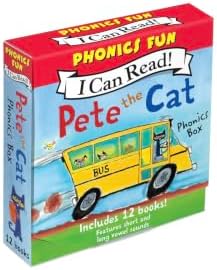
3. Pete the Cat 12-Book Phonics Fun! — Best Phonics + Fun Combo
The Real Story
Here’s the parenting cheat code: your kid LOVES Pete the Cat, and Pete the Cat happens to have a 12-book phonics box set. Each mini-book focuses on a short or long vowel sound with Pete’s signature groovy stories — so children practice real phonics while reading about their favorite blue cat. At $7.24 for 12 books (60¢ each), it’s the cheapest way to add the “fun factor” to phonics practice. With 12,277 ratings at a 4.7 average, it’s one of the best-selling phonics sets on Amazon. One reviewer’s honest note: “Great for beginner readers. Would have given this 5 stars if there weren’t duplicate books in the bundle.”
What Actually Works
- 12 phonics mini-books for 60¢ each: The best character-based phonics value.
- Vowel-focused progression: Short and long vowel sounds covered book by book.
- Character motivation: Kids who love Pete will WANT to read these — motivation is half of reading.
- 12,277 ratings with a 4.7 average: A proven crowd-pleaser.
- “Perfect for my kindergarteners” — teachers use these in the classroom.
The Honest Con
- Some bundles have duplicates: A few reviewers report duplicate books in the box — check your bundle when it arrives.
- Small format: The mini-books are petite (about 5″ tall) — designed for little hands, but easy to misplace.
What Real Buyers Say on Amazon
⭐⭐⭐⭐⭐ “The cutest sized books! They were perfect for my kindergarteners! Easy to read, great size for children, and the box they came in is too cute.” — Verified Purchase
⭐⭐⭐⭐ “Great for beginner readers. Would have given this 5 stars if there weren’t duplicate books in the bundle.” — Verified Purchase
Who It’s Best For
Pete the Cat fans who need phonics practice — the perfect companion to Bob Books (phonics rigor) plus Pete (fun).
Worried About Duplicates?
Duplicate reports are the exception, not the rule, and Amazon’s return policy covers them easily. Even with a duplicate or two, 10-11 unique phonics books for $7.24 is still a bargain.
Cost-Per-Use
$7.24 ÷ 12 books = 60¢/book — read on repeat by Pete fans for months.
4. Hop on Pop — Best Rhyming Sight-Word Book

The Real Story
Dr. Seuss called Hop on Pop “the simplest Seuss for youngest use” — and it’s been teaching kids to read for over 60 years. The genius is in the rhymes: “POP, Pop… We like to hop. We like to hop on top of Pop.” The rhyming patterns make words predictable, so children can guess-and-check their way into reading. At $4.46 with 10,399 ratings at a 4.9 average, it’s arguably the best $4.46 you’ll ever spend on reading. It’s also a board book — indestructible against kindergarten handling.
What Actually Works
- Rhyme = reading superpower: Rhyming words help kids predict, decode, and remember.
- Board book durability: Survives the car, the couch, and the baby sibling.
- 10,399 ratings with a 4.9 average: A 60-year-old classic that still tops the charts.
- $4.46: The cheapest “real book” on this list.
- Short, achievable: A beginner can finish it — and finishing a whole book is the confidence win.
The Honest Con
- Nonsense words abound: Seuss invented words (“THID”) — a minor distraction for strict phonics practice.
- No story arc: It’s a collection of rhymes, not a plot — fine for early readers, less satisfying for read-aloud.
What Real Buyers Say on Amazon
⭐⭐⭐⭐⭐ “It was a great book and would recommend it to everyone. I liked the rhymes and the alliteration. My kids learned to read with this one.” — Verified Purchase
⭐⭐⭐⭐ “Classic Dr. Seuss for a reason. My daughter can ‘read’ this one by herself now because the rhymes make it so predictable.” — Verified Purchase
Who It’s Best For
The beginning reader who needs a book they can actually finish solo — and families who want a durable classic.
Worried About the Nonsense Words?
Nonsense words are actually a feature for phonics: kids have to sound them out letter-by-letter (no guessing from meaning), which is exactly the decoding skill teachers want. And the real words outnumber the invented ones.
Cost-Per-Use
$4.46 ÷ hundreds of reads across multiple kids = pennies per read — the best ROI on this list.
5. Pete the Cat: I Love My White Shoes — Best Read-Aloud Confidence Book

The Real Story
This is the book that turned Pete the Cat into a household name — and it’s a perfect “first real book” for kindergartners. Pete steps in strawberries, blueberries, and mud, and his shoes change color — but Pete keeps singing his song: “I love my white shoes… I love my red shoes!” The story teaches colors, a positive attitude, and (for beginning readers) a repeating, predictable text they can join in on. At $2.99 with 13,113 ratings at a 4.9 average, it’s the cheapest confidence-builder on this list. Kids memorize it, “read” it to themselves, and suddenly believe they’re readers.
What Actually Works
- Repetitive, singable text: Kids predict and “read along” — early reading in disguise.
- Life lesson built in: “No matter what you step in, keep walking along and singing your song.”
- 13,113 ratings with a 4.9 average: One of the highest-rated picture books on Amazon.
- $2.99 sale price: A steal for a modern classic.
- Follow-up books exist: If they love this one, the whole Pete universe awaits.
The Honest Con
- More read-aloud than decode-it-yourself: The text is predictable, not strictly decodable — best paired with phonics books.
- Price fluctuates: The $2.99 price appears frequently but isn’t guaranteed; it usually hovers under $10.
What Real Buyers Say on Amazon
⭐⭐⭐⭐⭐ “My kids love this book so much they sing along with Pete. It’s the first book my kindergartener ‘reads’ to her little brother by herself.” — Verified Purchase
⭐⭐⭐⭐ “A groovy classic! Great for teaching colors and attitude. My son memorized it in two days and proudly reads it to anyone who will listen.” — Verified Purchase
Who It’s Best For
The child who needs to FEEL like a reader before they technically are — the confidence booster that pairs perfectly with Bob Books.
Worried It’s Not “Educational” Enough?
The repetition, rhyme, and prediction skills it builds ARE early reading skills — plus the color vocabulary and the social-emotional lesson about resilience. It’s the fun layer of a balanced reading diet, not the only layer.
Cost-Per-Use
$2.99 ÷ 50+ read-alouds = 6¢/read — the cheapest confidence in early reading.
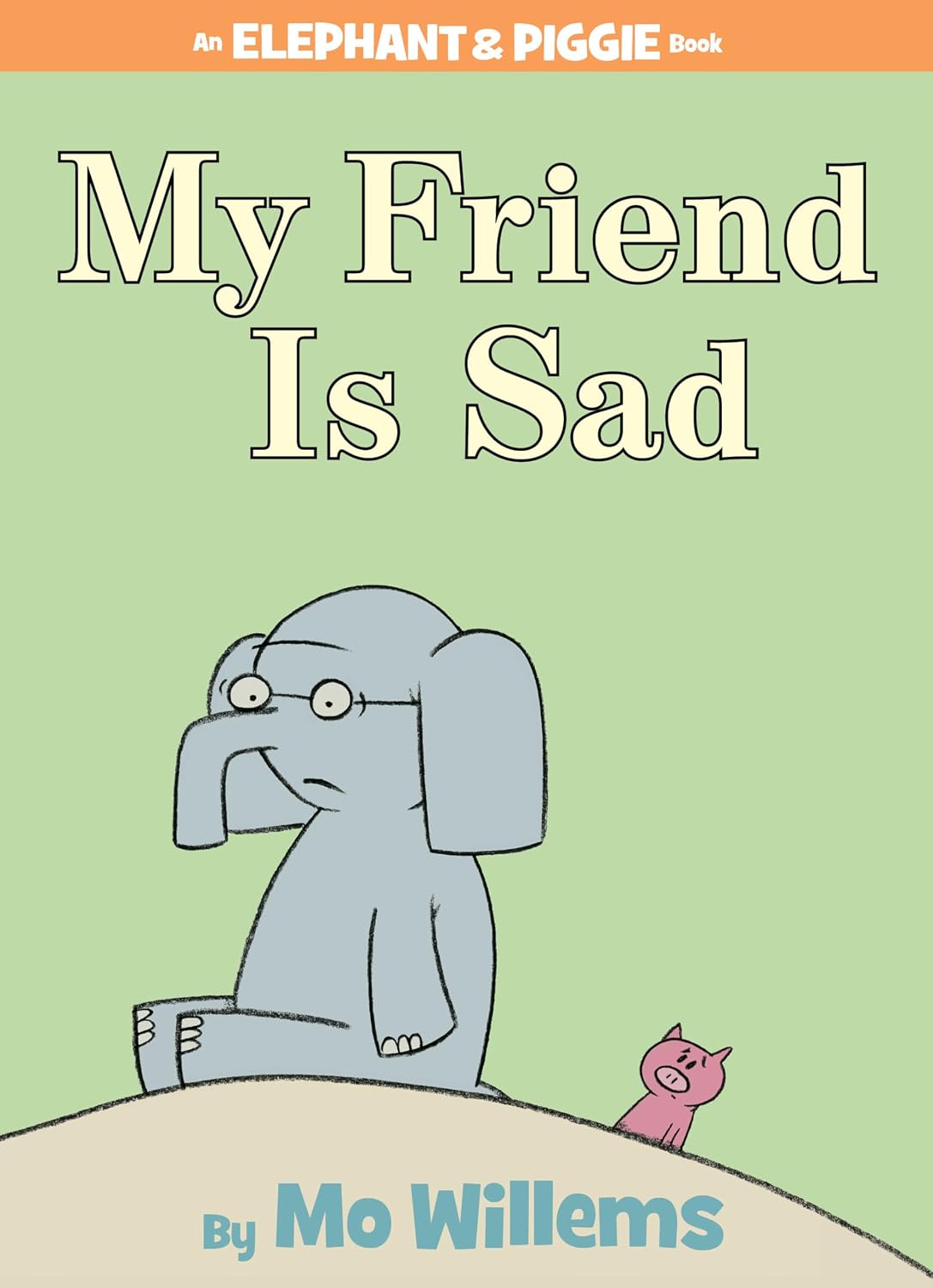
6. My Friend is Sad (An Elephant & Piggie Book) — Best Dialogue Readers
The Real Story
Mo Willems’ Elephant & Piggie books are the most-recommended beginning-reader series in parent groups — and the secret is the dialogue. Gerald the Elephant and Piggie talk to each other in speech bubbles with huge, expressive type, so TWO kids (or a kid and a parent) can read the book like a play. Reading specialists love them because the repetition and picture support let early readers succeed; kids love them because they’re hilarious. My Friend is Sad is a gentle story about friendship and emotions — a “conversation starter” as one grandparent put it. At $6.83 with a 4.9 average, it’s the series starter parents keep coming back for.
What Actually Works
- Dialogue format = engagement: Kids read “parts” like actors — the most fun a beginning reader can have.
- Emotional intelligence built in: Stories about friendship, sharing, and feelings kids actually experience.
- 4.9 rating: Near-perfect reviews from families and teachers.
- Series continuation: If they love Gerald and Piggie, there are 25+ books to collect.
- “Entertaining, educational, and real conversation starters” — one reviewer’s exact words.
The Honest Con
- Sight-word heavy, not strictly decodable: Some words (“especially”) are beyond a brand-new decoder — best for stage-two readers (after Bob Books).
- Addictive series: Kids will want ALL of them — budget accordingly.
What Real Buyers Say on Amazon
⭐⭐⭐⭐⭐ “The Elephant and Piggie books are entertaining, educational and real conversation starters for young readers. You can’t go wrong with these.” — Verified Purchase
⭐⭐⭐⭐⭐ “My grandson loves these books, very educational for him and a learning guide into life with an explanation he can understand.” — Verified Purchase
Who It’s Best For
The child who’s decoded the basics and needs books they’ll CHOOSE to read — the bridge from “learning to read” to “wanting to read.”
Worried About the Reading Level?
Elephant & Piggie sits right between Bob Books and standard early readers — the perfect next step. If your child can read Bob Books Set 1 confidently, they’re ready for Gerald and Piggie.
Cost-Per-Use
$6.83 ÷ dozens of re-reads (kids re-read these obsessively) = under 20¢/read — comedy gold for early readers.
7. Brown Bear, Brown Bear, What Do You See? — Best First Pattern Book

The Real Story
With 56,728 ratings — the most of ANY book on this list — Brown Bear is the book generations of children learned to “read” before they could actually read. The pattern is famously simple: “Brown Bear, Brown Bear, what do you see? I see a red bird looking at me.” Every page repeats the structure with a new animal and color, so children memorize the pattern and can “read” the whole book with confidence. Reading specialists call this “pattern reading” — the earliest literacy skill. At $5.36 for the durable board-book edition, it’s a first-library essential.
What Actually Works
- 56,728 ratings with a 4.9 average: The most-reviewed children’s book on this list, by far.
- Predictable pattern: Kids “read” the whole book independently within days — a massive confidence boost.
- Colors + animals + sequence: Vocabulary building wrapped in rhythm.
- Board book edition: Survives toddlers, car rides, and the “I’ll read it to the baby” sibling.
- Intergenerational love: “Loved this book as a kid, bought it for my daughter.”
The Honest Con
- Not decodable: It’s memorization and pattern reading, not phonics — pair with Bob Books for actual decoding skills.
- Simple by design: Some parents find it repetitive; kids find it hypnotic.
What Real Buyers Say on Amazon
⭐⭐⭐⭐⭐ “Loved this book as a kid, bought it for my daughter. It’s a great book. I hope she likes it as much as I do.” — Verified Purchase
⭐⭐⭐⭐⭐ “Arrived in perfect condition. My three-year-old son has memorized it and can now ‘read’ it to us – it’s the sweetest thing.” — Verified Purchase
Who It’s Best For
The very first book in a child’s library — babies through kindergartners. The pattern book that starts the reading journey.
Worried Your Kindergartner Is “Too Old”?
Pattern reading matters at EVERY stage of early literacy — even fluent readers benefit from the rhythm and prediction practice. Plus, the board book is the perfect “little sibling book,” keeping your bigger kid involved in family reading time.
Cost-Per-Use
$5.36 ÷ hundreds of reads across multiple children = pennies per read — the family heirloom of early literacy.
8. Chicka Chicka Boom Boom — Best Alphabet Book

The Real Story
“A told B, and B told C, ‘I’ll meet you at the top of the coconut tree!'” — if your child’s teacher plays this book on repeat, it’s because Chicka Chicka Boom Boom turns the alphabet into a climbing, falling, rhyming adventure. The letters race up the coconut tree, fall down, and get patched up by their uppercase parents. Kids memorize the rhythm, chant along, and learn their ABCs without realizing they’re learning. At $7.99 with 41,739 ratings at a 4.9 average, it’s the alphabet book kindergarten teachers recommend above all others.
What Actually Works
- 41,739 ratings with a 4.9 average: A top-5 bestseller in children’s alphabet books for decades.
- Rhythmic, chantable text: Perfect for phonological awareness — hearing the sounds in words.
- Letter recognition + sequencing: The story IS the alphabet song with a plot.
- Memorization confidence: Kids “read” it aloud from memory before they can decode — a huge early win.
- Beloved across generations: Parents who loved it as kids buy it for their own children.
The Honest Con
- Not a phonics book: It teaches letter NAMES and rhythm, not letter SOUNDS in words — pair with Bob Books for sounds.
- Some editions have print-quality complaints: A few reviewers report off-center copies from third-party sellers — buy the standard edition.
What Real Buyers Say on Amazon
⭐⭐⭐⭐⭐ “Great book… my wife is pregnant but I still read it to my little one in hopes she will recognize my voice when born.” — Verified Purchase
⭐⭐⭐⭐⭐ “A classic that never gets old. My kindergartner comes home singing the alphabet tree song because of this book.” — Verified Purchase
Who It’s Best For
The child learning letter names and sounds — the perfect partner to phonics sets, and the book that makes the alphabet FUN.
Worried About the Print-Quality Complaints?
Those complaints are about specific third-party copies. Amazon’s standard edition (the one this link goes to) is the reliable classic — and any issue is covered by Amazon’s return policy.
Cost-Per-Use
$7.99 ÷ daily alphabet chants for a year+ = 2¢/day for complete letter mastery.
9. The Cat in the Hat — Best First Dr. Seuss

The Real Story
You can’t have a learn-to-read list without the book that started the entire “beginner book” category. When Dr. Seuss wrote The Cat in the Hat with just 236 words — after publishers challenged him to write a book first-graders could actually read — he invented the modern early reader. The rhyming, the mischief, the cat who makes a mess and cleans it up: it’s the first “real chapter-ish book” many children read entirely on their own. With 22,413 ratings at a 4.9 average and 60+ years in print, it’s the definition of a classic.
What Actually Works
- 236 carefully-chosen words: A true beginner book that still tells a real story.
- Rhyme + repetition + rhythm: The trifecta of early literacy.
- 22,413 ratings with a 4.9 average: Universally beloved for generations.
- Big-kid appeal: Reading “the Cat in the Hat” feels like a milestone — because it is.
- Launchpad for the Beginner Books series: One success leads to Green Eggs and Ham, One Fish Two Fish, and more.
The Honest Con
- Beyond pure beginner level: The full text is a stretch for a brand-new decoder — best after Bob Books Set 1.
- Messy-mischief theme: Kids LOVE the chaos; parents do the cleanup conversation afterward. (It does end with the mess cleaned up!)
What Real Buyers Say on Amazon
⭐⭐⭐⭐⭐ “A classic every child should own. My daughter read this one to ME – the proudest moment of her kindergarten year.” — Verified Purchase
⭐⭐⭐⭐ “The rhyme makes it so predictable that my son can read along after just a few pages. Timeless for a reason.” — Verified Purchase
Who It’s Best For
The child who’s cracked the code with Bob Books and needs a “big kid book” to show off — the milestone moment of early reading.
Worried It’s Too Hard?
Start by reading it TO your child (the rhythm is magical), then let them take over the rhyming words they can predict. Within weeks, they’ll be reading whole pages — that’s how the book was designed.
Cost-Per-Use
$9.99 ÷ the single proudest reading milestone of early childhood = priceless, and the book survives for siblings.
10. Don’t Let the Pigeon Drive the Bus! — Best “I’ll Read It Myself” Book

The Real Story
This is the book that makes children feel like they’re IN the story. The bus driver leaves YOU in charge: “Don’t let the pigeon drive the bus!” Then the pigeon pleads, begs, bargains, and throws a tantrum — and the reader gets to say NO. Kids shout “NO!” at every page (that’s reading engagement!), and the giant, expressive type and speech bubbles make even the begging words decodable and fun. Mo Willems won a Caldecott Honor for this book, and at $8.97 with 5,700 ratings at a 4.8 average, it’s the perfect “fun layer” book that gets read over and over.
What Actually Works
- Interactive reading: Kids respond to the pigeon — active engagement beats passive listening.
- Big, expressive type: The words are visually dramatic, which helps decoding stick.
- Caldecott Honor winner: Award-winning art and storytelling.
- Emotional vocabulary: The pigeon models words for feelings — “please,” “I’m so sorry,” “frustration.”
- 5,700 ratings at a 4.8 average: A modern classic parents and kids both love.
The Honest Con
- Not a phonics progression: It’s a “want to read it” book, not a “learn every sound” book — the fun layer, not the skill layer.
- One story, not a set: You’ll want the whole Pigeon series (there are 7 books) once they’re hooked.
What Real Buyers Say on Amazon
⭐⭐⭐⭐⭐ “Love this book! My grandchildren love to tell the pigeon NO – it’s the first book they ever wanted to ‘read’ to me.” — Verified Purchase
⭐⭐⭐⭐⭐ “Kids love this book! I first heard it during a reading at the Children’s Museum and have loved it ever since.” — Verified Purchase
Who It’s Best For
The reluctant reader who needs a book that feels like a game — the perfect prize read for after phonics practice.
Worried About “NO!” Being the Only Word?
The pigeon’s dramatic pleading IS rich vocabulary and emotional language — and the repetition of “No!” gives even the newest reader something to read aloud on every page. Engagement first, decoding follows.
Cost-Per-Use
$8.97 ÷ daily “NO!!!” shouting sessions = cents per shout — the most entertaining literacy investment you’ll make.
→ Get the Pigeon Book on Amazon
How to Choose the Right Learn-to-Read Books (A Non-Repetitive Buying Guide)
Skip the “just buy everything” approach. Here are the decision criteria that actually matter — most of which have nothing to do with the products above:
1. Match the Book to the Reading Stage (The Most Important Rule)
Books fail when they’re either too hard (frustration → tears → “I hate reading”) or too easy (boredom → unread shelf). The three stages of kindergarten reading:
- Stage 1 — Pre-reader (letter sounds, no decoding yet): Needs decodable books where every word can be sounded out (Bob Books) plus pattern books they can memorize (Brown Bear).
- Stage 2 — Emerging reader (can decode simple words): Needs sight-word-rich, predictable text at their exact level (First Little Readers, Hop on Pop, Elephant & Piggie).
- Stage 3 — New fluent reader (reads sentences with help): Needs longer stories and beloved characters (Cat in the Hat, Pete the Cat, Pigeon).
The 5-page test: Hand the child any new book. If they miss more than 1 in 20 words, it’s too hard for solo reading — save it for read-aloud. If they can read every word AND are bored, it’s too easy — level up.
2. Decodable vs. Predictable: Know Which You’re Buying
- Decodable books (Bob Books) control the letter sounds so kids can sound out every word — the skill-building layer.
- Predictable books (Brown Bear, Pete the Cat) repeat patterns so kids can guess and memorize — the confidence layer.
- You need BOTH. Skill without confidence = reluctant reader. Confidence without skill = fake reading.
3. Format Matters More Than You Think
- Board books (Hop on Pop, Brown Bear) survive the destructor phase and are safe for the baby sibling.
- Tiny paperbacks (First Little Readers, Bob Books) are perfect for little hands but get lost — keep them in their box.
- Full-size hardcovers (Cat in the Hat) feel like “real books” — great for the milestone moment.
4. Value Per Book, Not Price Per Book
A $15 pack of 25 books (61¢/book) is a better deal than a $9 single book — but ONLY if the child actually reads them. The real calculation is price ÷ times read. The books that get re-read are the ones matched to the stage (rule #1).
5. Series Potential = Reading Momentum
Every book on this list is a gateway to a series (Bob Books Sets 1-5, First Little Readers A-D, 25+ Elephant & Piggie titles, 7 Pigeon books, dozens of Pete the Cat and Dr. Seuss titles). One win becomes a reading habit — that’s the goal.
6. Read-Aloud and Reader Books Are Different Purchases
Don’t make your child’s independent-reading books carry the emotional weight of read-aloud time. Keep a separate stack of “grown-up reads it” books (chapter books, classics) so reading never feels like only-work. The best kindergarten libraries have both stacks.
Frequently Asked Questions
How many books does a kindergartener need for learning to read?
You don’t need a library — you need the right 20-30 books. A starter stack of two boxed sets (a decodable set like Bob Books + a leveled pack like First Little Readers) plus 4-6 character books is plenty for an entire school year. Quality and stage-matching beat quantity every time.
What’s the difference between phonics books and sight-word books?
Phonics books (Bob Books, Pete the Cat Phonics) teach decoding — sounding out letters and letter combinations. Sight-word books (First Little Readers, Hop on Pop) teach high-frequency words that don’t always follow phonics rules (“the,” “said,” “was”). Beginning readers need both, ideally alternating: phonics builds the skill, sight words build the speed.
At what age should a child start learning to read?
Children develop reading readiness between ages 4-7 — there’s no single “right” age. Signs of readiness: interest in books, recognizing some letters, awareness of rhymes, and pointing out words in the environment. The books on this list span that whole readiness window.
My child knows the alphabet but can’t read yet — where do we start?
Start with Bob Books Set 1 — the first book uses only four letter sounds and builds from there. Read it with them, celebrate the first book, then let them move through the set at their own pace. Add pattern books (Brown Bear) for fun confidence in between.
Are these books appropriate for a child who’s already reading a little?
Yes — the beauty of this list is the progression. If they can already decode, skip Bob Books Set 1 and start with First Little Readers Level B/C or Elephant & Piggie, then Cat in the Hat. If they’re fluent, they’re ready for chapter books — but they’ll still re-read these for comfort.
How do I keep my child interested in reading practice?
Three proven tricks: (1) Let them CHOOSE the book from a small basket of stage-appropriate options — choice is motivation. (2) Stop while they’re enjoying it — end on a win, never a forced page. (3) Read the fun books TO them as a reward after the phonics work. Interest follows success, not pressure.
The Bottom Line: My 10-Book Kindergarten Reading Stack
I started this post frustrated — a shelf of unread books and a kid who’d lost interest. Here’s the stack that actually worked in my house, and it costs less than $80 total:
| Book | Role in the Stack | Price |
|---|---|---|
| Bob Books Set 1 | The phonics foundation | $11.29 |
| First Little Readers Level A | The daily leveled practice | $15.30 |
| Pete the Cat Phonics Fun | Phonics with a fan-favorite character | $7.24 |
| Hop on Pop | The rhyme bridge | $4.46 |
| Pete the Cat: White Shoes | The confidence sing-along | $2.99 |
| My Friend is Sad | The dialogue play-book | $6.83 |
| Brown Bear | The pattern book classic | $5.36 |
| Chicka Chicka Boom Boom | The alphabet jam | $7.99 |
| The Cat in the Hat | The milestone book | $9.99 |
| Don’t Let the Pigeon Drive the Bus! | The “I’ll read it myself” reward | $8.97 |
| Total | A complete kindergarten reading year | ~$80.42 |
That shelf of pretty-but-unread books taught me the lesson I want to leave you with: reading confidence doesn’t come from how many books you own — it comes from the child finishing their first whole book, all by themselves, and realizing they can do it. These ten books are designed to hand your child that moment, one page at a time, without breaking the budget.
Start with one boxed set tonight. Read the first Bob Book together. And when your child reads it back to you tomorrow — that’s the moment this whole list is about.
Happy reading, mama. 📚
Note: Prices and availability checked at the time of writing and may change.
Sources
- Brightly — The 50 Best Books for 5- and 6-Year-Olds
- ReadingVine — Bob Books Set 1 Reading Level: A Complete Guide
- Pride Reading Program — The Best Books for Beginning Readers: A Grade-by-Grade Guide
- Amazon product pages and verified buyer reviews — Bob Books Set 1, First Little Readers, Pete the Cat Phonics Fun, Hop on Pop, Pete the Cat: I Love My White Shoes, My Friend is Sad, Brown Bear Brown Bear, Chicka Chicka Boom Boom, The Cat in the Hat, Don’t Let the Pigeon Drive the Bus!
- Facebook kindergarten parent group discussion — Best books for beginning readers
Disclosure: This post contains affiliate links. As an Amazon Associate, I earn from qualifying purchases at no additional cost to you. I only recommend books I’ve genuinely read with my own kids.
