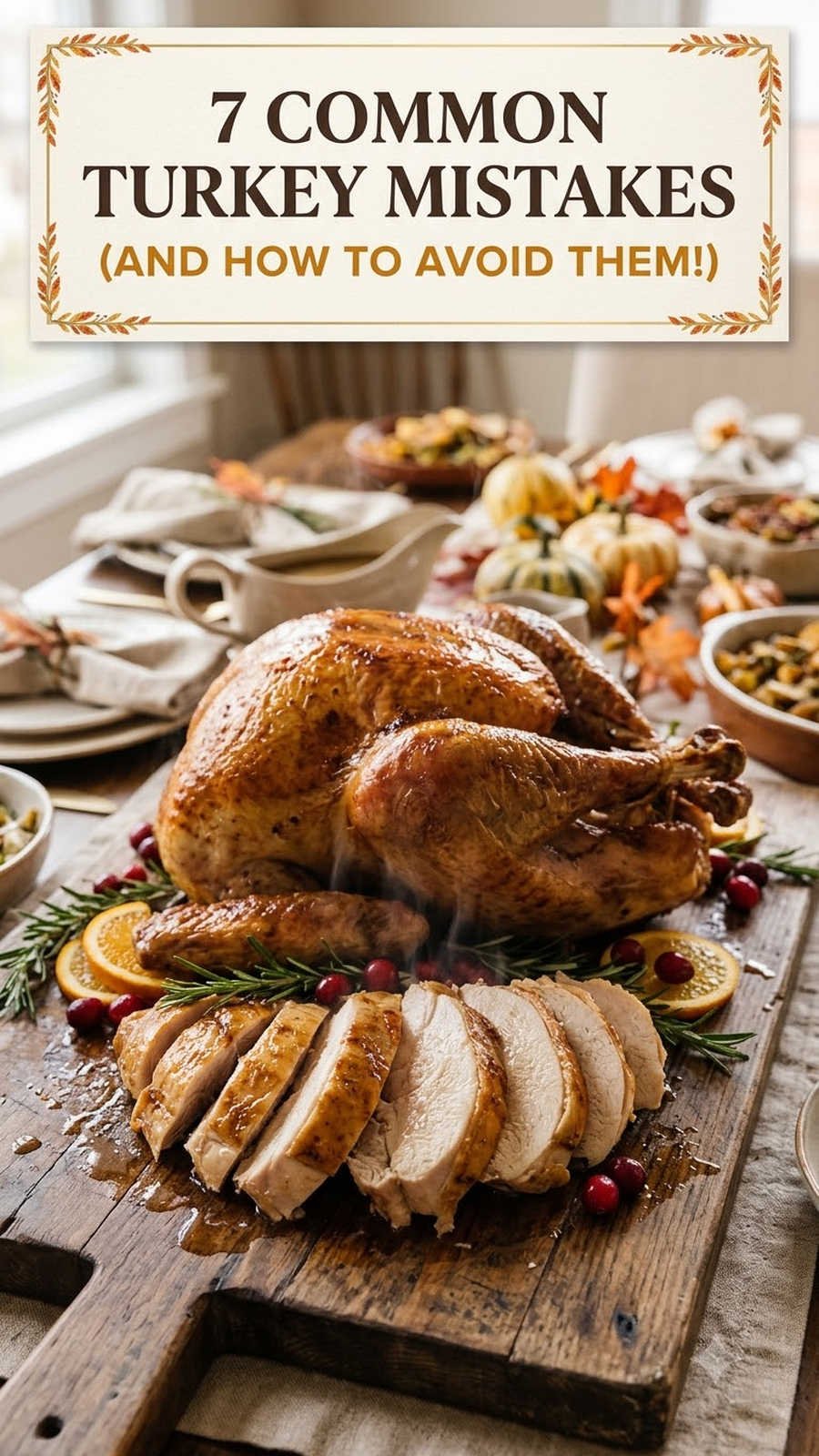
7 Common Turkey Mistakes and How to Avoid Them (2026)

Avoid the 7 most common turkey mistakes with tested kitchen fixes for juicy breast meat, crisp skin, and safe holiday carving.
Holiday anxiety reaches its peak when you open the oven door on Thanksgiving afternoon. Over on Reddit’s r/Cooking community, hundreds of frantic home cooks discover every year that their whole bird is still rock-hard in the center or bone-dry on the carving board.
Grab a fresh cup of coffee ☕—I spent years learning every poultry pitfall the hard way on our family homestead. Here is how to sidestep the most common turkey mistakes so your holiday centerpiece carves up juicy, tender, and crackling crisp.
🧭 Nancy’s Top 3 Quick Picks & Recipe Showstoppers
- 1. Stop Countertop Thawing — Refrigerator cold-thawing keeps poultry safe from bacterial proliferation.
- 2. Ditch the Plastic Pop-Up Timer — Calibrated instant-read probes prevent chalky, overcooked breast meat.
- 3. Never Skip the Carving Rest — Foil-tented resting lets muscle fibers reabsorb natural pan juices.
🍳 Essential Roasting & Carving Cookware Table
Reliable food-safe kitchen tools keep your Thanksgiving cooking running smoothly without dangerous guesswork.
| Essential Tool / Supply | Model / Spec | Purpose & Nancy’s Prep Secret |
|---|---|---|
| Digital Instant-Read Thermometer | TempPro 1-Sec Digital Meat Thermometer | Checks internal thigh and breast temperature in one second flat without leaving the oven door open. |
| Heavy-Duty Roasting Pan | Cuisinart 16-Inch Stainless Roaster with Rack | Suspends the bird above pan drippings so circulating oven heat crisps the underside evenly. |
| Stainless Sheet Pan & Wire Rack | Stainless Steel Half Sheet Pan with Cooling Rack | Lifts brined poultry so cold air circulates underneath during the overnight refrigerator dry. |
| Heavy-Duty Poultry Shears | MAD SHARK Heavy Duty Kitchen Shears | Cuts through tough poultry backbones quickly if you choose to spatchcock your bird for fast roasting. |
| Carving Knife & Fork Set | HOSHANHO 8-Inch Carving Knife & Fork Set | Slices cleanly through golden skin and tender breast meat without tearing delicate slices. |
🍗 7 Common Turkey Mistakes and How to Avoid Them
1. Stop Countertop Thawing (The Food Safety Trap)
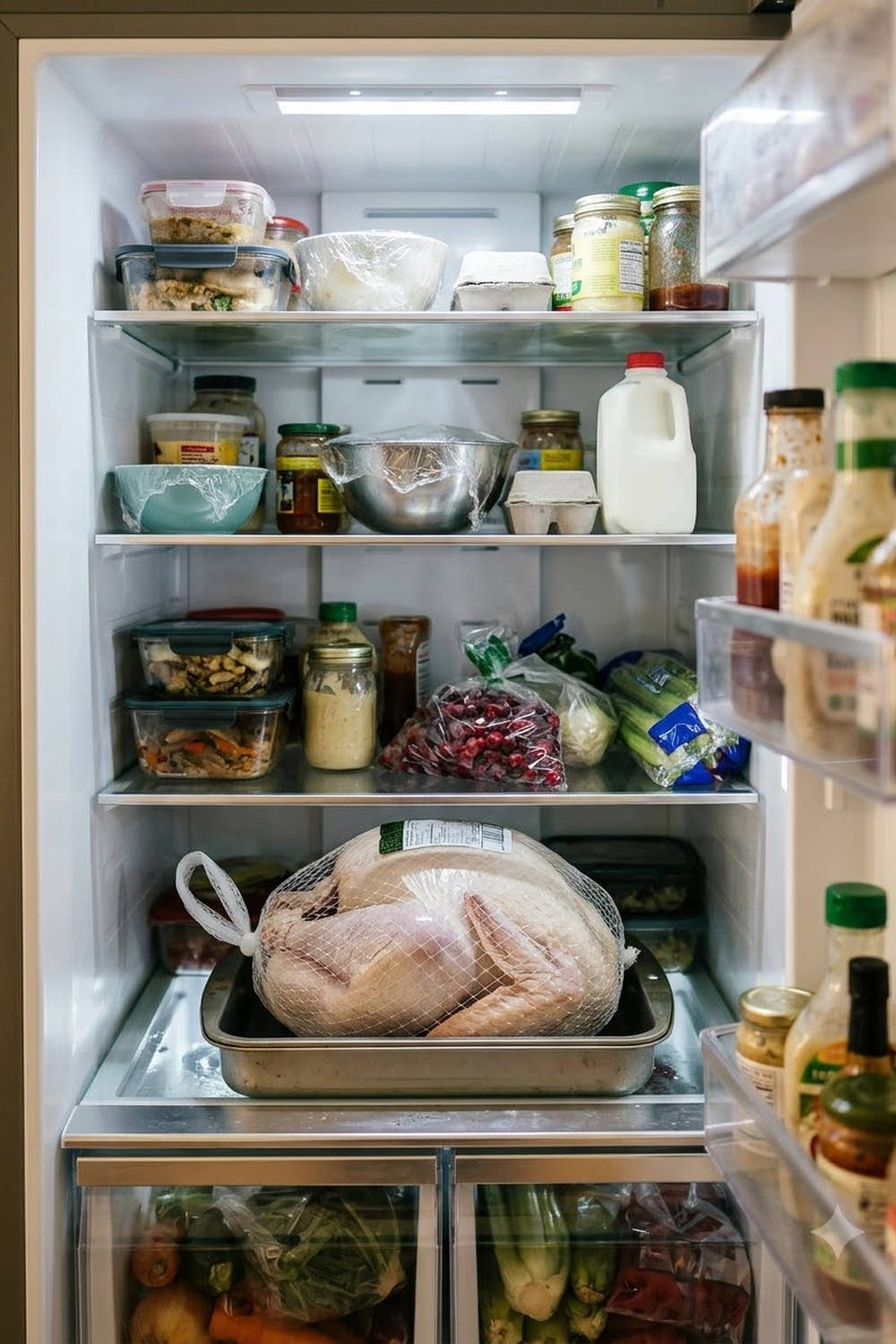
Leaving a frozen whole bird on the kitchen counter invites rapid bacterial multiplication long before the center ever thaws. The exterior skin quickly enters the USDA danger zone between 40°F and 140°F while the cavity remains frozen solid.
Place your bird inside a rimmed baking sheet on the bottom refrigerator shelf to catch any condensation leaks. Allow a full 24 hours of refrigerator thawing for every four to five pounds of poultry weight.
- Nancy’s Kitchen Hack: If Thanksgiving morning arrives and your bird is still icy inside, submerge it in a clean sink filled with cold tap water. Change the cold water every 30 minutes to ensure rapid, safe heat exchange.
2. Never Wash Raw Turkey in the Kitchen Sink
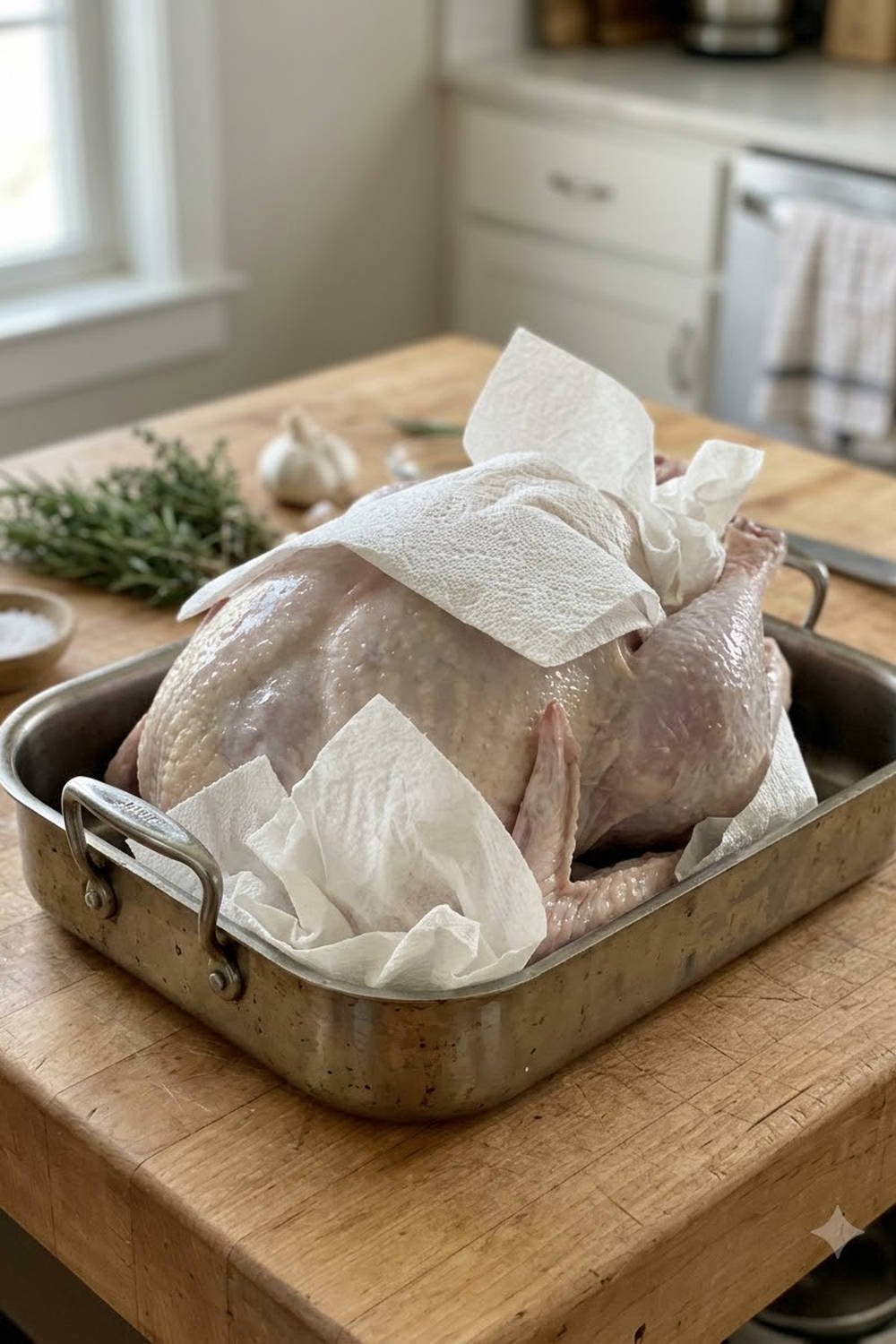
Old cookbooks routinely told cooks to rinse poultry under running tap water before seasoning. Modern food safety tests prove that splashing water droplets spray Salmonella and Campylobacter bacteria up to three feet across kitchen surfaces.
Lifting the turkey directly from its wrapper into the roasting pan prevents contaminating your clean dish drying racks and sponges. Simply blot the exterior skin and inner cavity thoroughly with disposable paper towels.
- Nancy’s Kitchen Hack: Keep a dedicated grocery bag right next to your cutting board for immediate paper towel disposal. Toss the used towels directly into the bag so poultry juices never touch your countertops.
3. Ditch the Plastic Pop-Up Timer
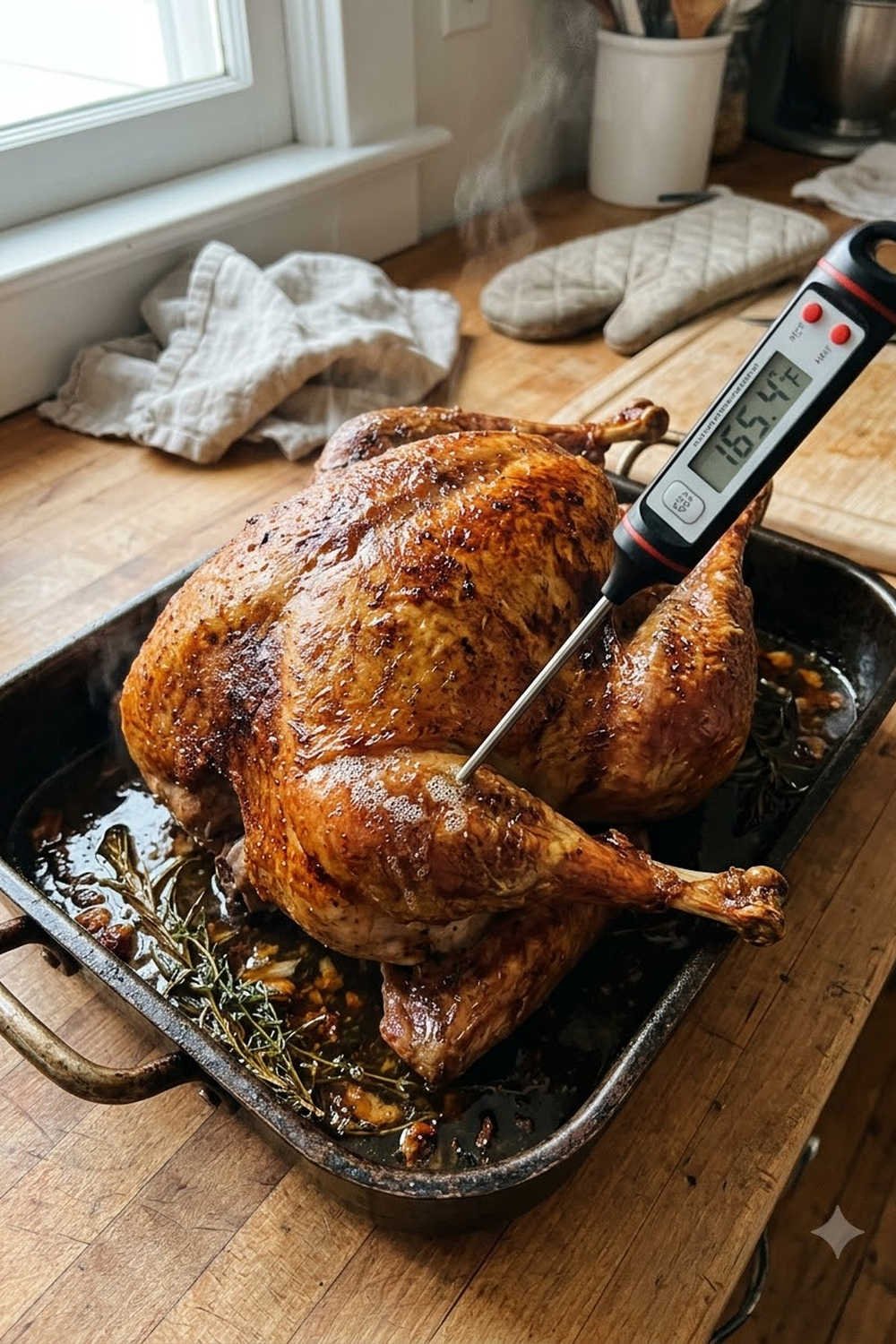
Factory plastic pop-up buttons rely on a small metal spring held by soft food-grade solder. These cheap indicators are calibrated to trigger between 180°F and 185°F, long after white breast meat has turned chalky and stringy.
Insert a digital instant-read thermometer probe into the thickest part of the inner thigh without touching bone. Pull the turkey from the oven when the breast registers 160°F and the dark thigh meat hits 165°F.
- Nancy’s Kitchen Hack: Check the temperature in both thighs and the center of each breast lobe before removing the pan. Heat distribution varies across roasting ovens, so testing multiple spots prevents surprises at the carving table.
4. Stop Stuffing the Raw Turkey Cavity
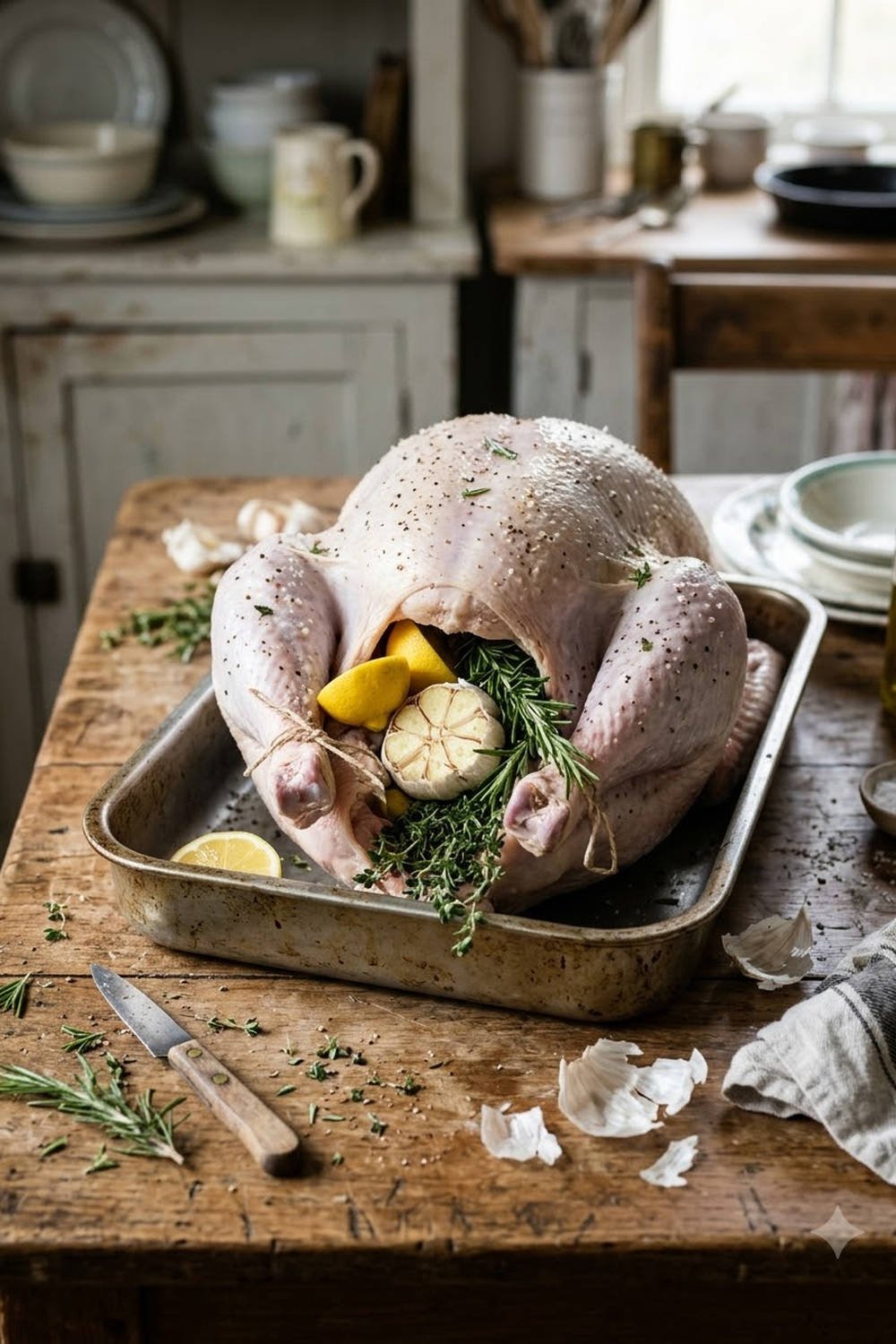
Packing dense bread stuffing into the cavity turns your Thanksgiving centerpiece into a slow-cooking food safety hazard. The bread absorbs raw poultry drippings and must reach 165°F to be safe, which overcooks the surrounding breast meat to 185°F.
Fill the empty cavity loosely with quartered lemons, halved garlic heads, sweet onions, and fresh rosemary sprigs instead. Bake your savory stuffing in a separate ceramic casserole dish basted with rich turkey stock.
- Nancy’s Kitchen Hack: Drizzle two ladles of warm pan drippings over your separate casserole dish during the last 15 minutes of baking. You get all the rich roasted poultry flavor with none of the food safety worries.
5. Never Roast a Wet Turkey (Air-Dry for Crisp Skin)
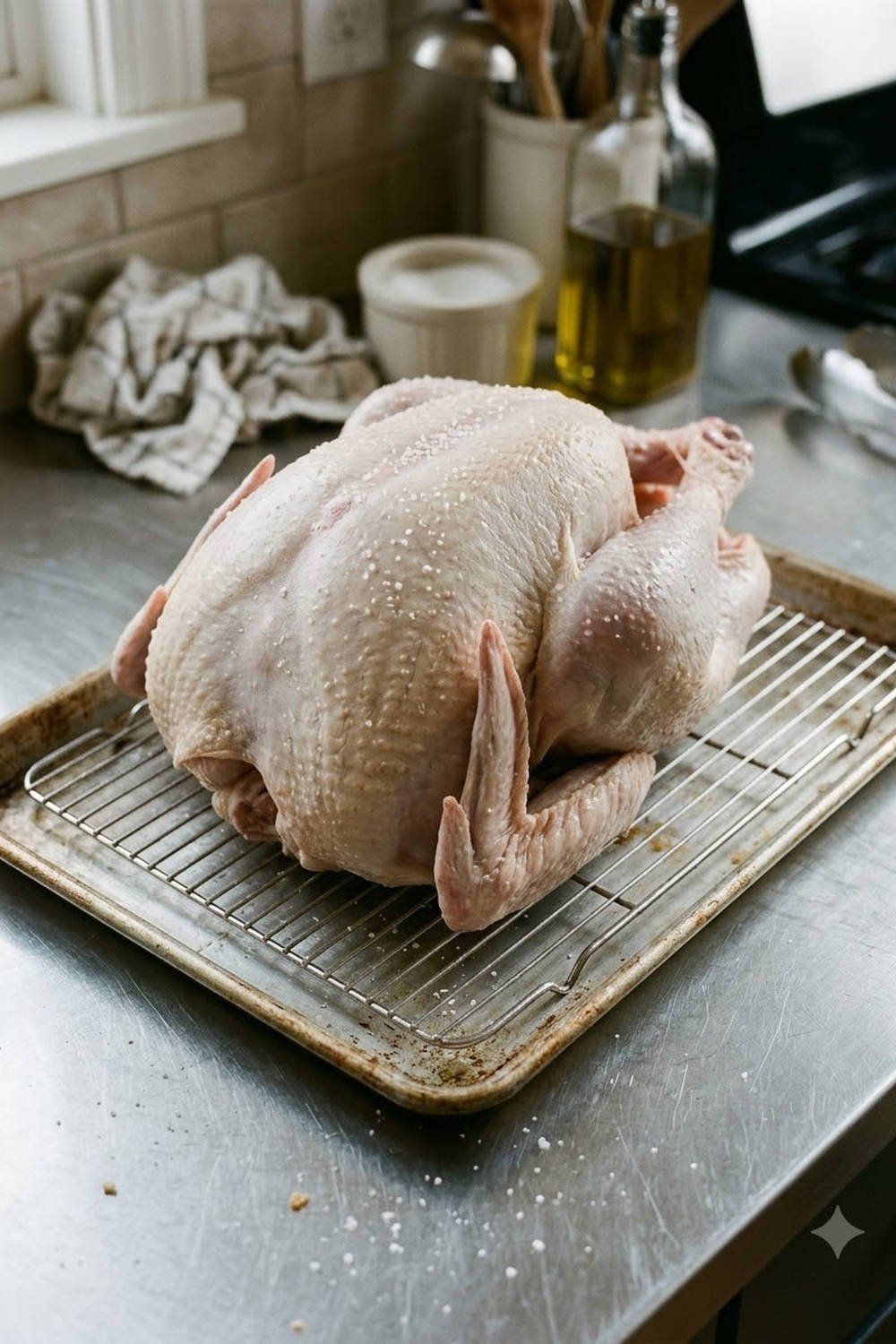
Popping a damp turkey straight from the brine bucket into a hot oven guarantees pale, rubbery skin. Trapped surface moisture evaporates into steam, which blocks the Maillard reaction needed for deep mahogany browning.
Set your brined bird on a wire cooling rack over a rimmed baking sheet and chill it uncovered in the refrigerator for 12 to 24 hours. The cold circulating air dries the exterior into a translucent, taut skin layer.
- Nancy’s Kitchen Hack: Rub two tablespoons of softened unsalted butter over the dried skin right before sliding the pan into the oven. The milk solids in the butter accelerate browning while adding rich holiday flavor.
6. Never Carve Immediately Out of the Oven
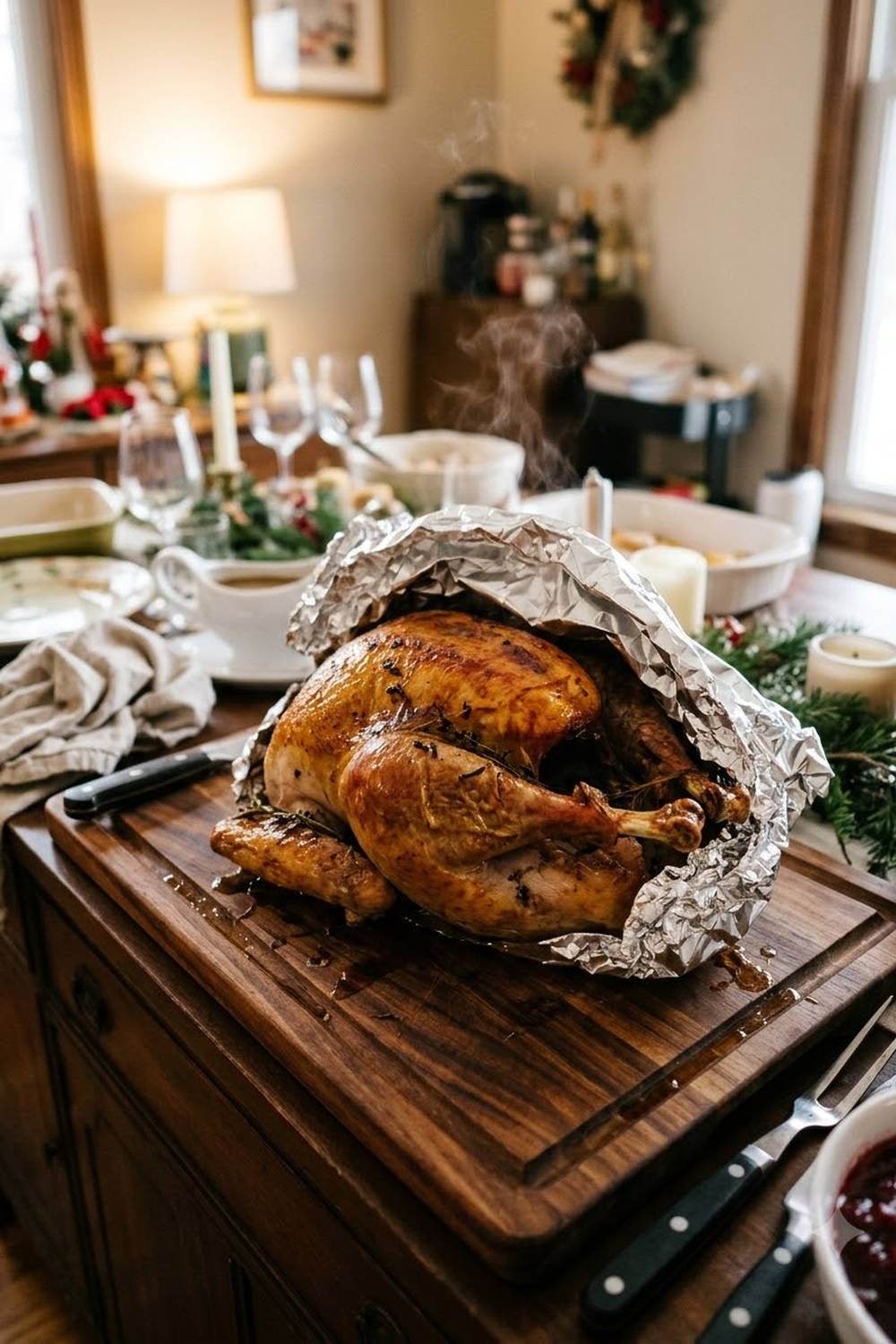
Slicing into a piping-hot turkey the minute it clears the oven causes internal juices to gush across your cutting board. Tightly contracted muscle fibers need time to relax and reabsorb moisture back into the meat.
Transfer your roasted bird to a grooved wooden carving board and drape a sheet of aluminum foil loosely over the top. Allow the turkey to rest undisturbed for 30 to 45 minutes before making your first knife cut.
- Nancy’s Kitchen Hack: Resting creates carryover cooking that naturally raises the internal temperature by another five degrees. It also gives you plenty of time to reheat gravies and finish side dishes on the stovetop.
7. Avoid Roasting Whole Without Temperature Shielding
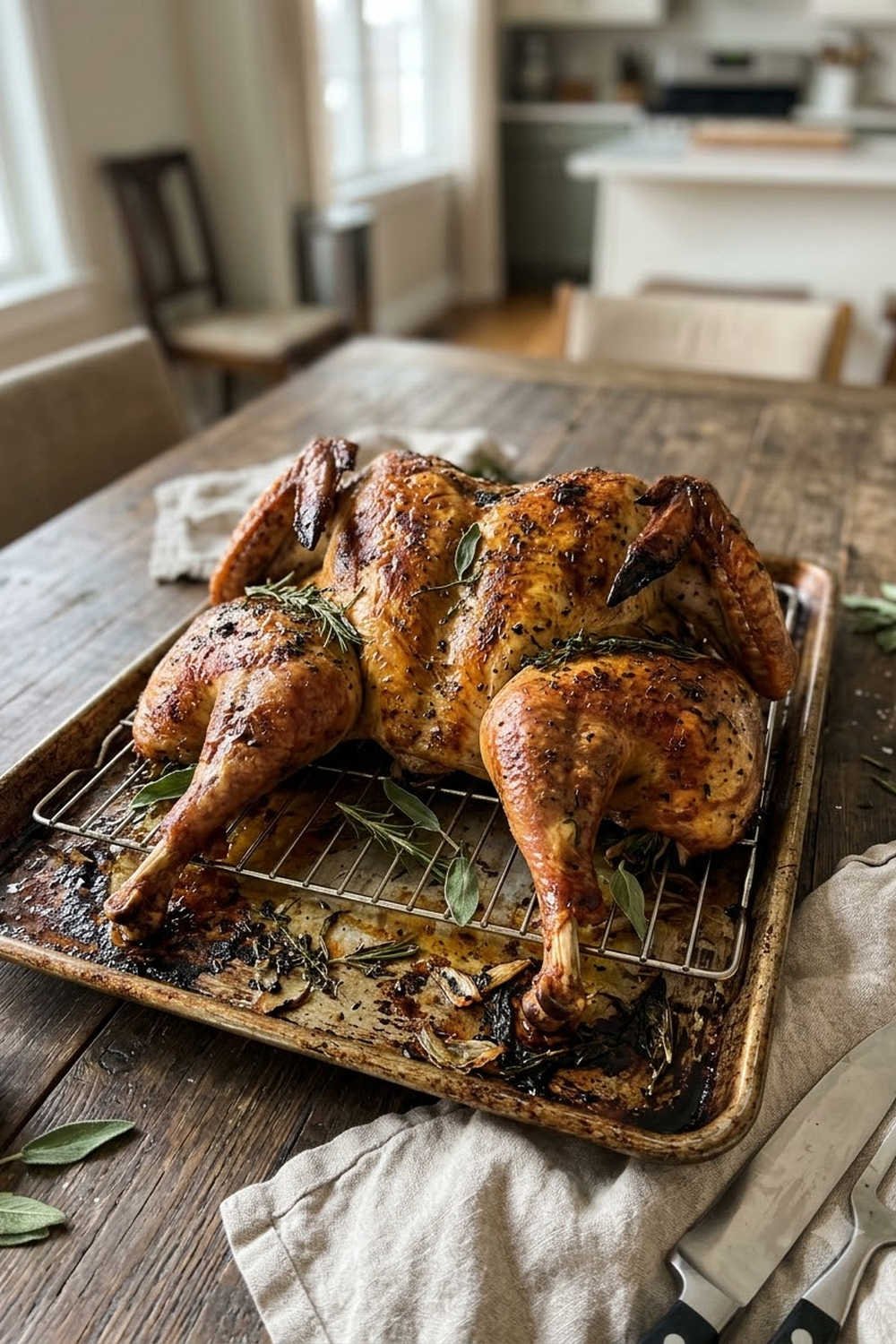
A whole turkey is built with two completely different meats that require different cooking speeds. Lean breast meat dries out above 160°F, while dense dark thigh meat requires 165°F to 175°F to break down tough connective collagen.
Shield the delicate breast meat with a folded sheet of buttered aluminum foil during the first two hours of roasting. Alternatively, use heavy kitchen shears to remove the backbone and roast the turkey spatchcocked flat in under 90 minutes.
- Nancy’s Kitchen Hack: Remove the foil shield during the final 45 minutes of cooking so the breast skin crisps to a deep golden color. Spatchcocking cuts your cooking time in half and guarantees crisp skin across every single slice.
🔬 The Science of Turkey Cooking & Food Safety Rules
Cooking a large whole bird requires understanding basic thermal physics and meat protein behavior. Poultry breast is composed of lean white muscle fibers with minimal collagen, while drumsticks and thighs contain active dark muscle wrapped in dense connective tissue.
High oven heat causes muscle proteins to tighten and squeeze out internal water droplets. Applying gentle heat shielding and resting allows the meat to maintain its natural juiciness throughout the holiday meal.
The 40°F Hard Temperature Rule
Raw poultry must remain below 40°F during thawing, brining, and seasoning to prevent pathogenic growth. Leaving a whole bird at room temperature allows bacterial colonies to double every twenty minutes.
If your refrigerator is packed to the brim, use an insulated camping cooler filled with ice packs. Check the ambient cooler temperature regularly with a probe thermometer to confirm it stays between 34°F and 38°F.
Resting Science & Moisture Re-Absorption
When meat roasts, moisture moves away from the exterior surface toward the cooler center of the bird. Slicing immediately releases that pressurized liquid onto your cutting board, leaving the carved meat dry.
During a 30-minute rest, muscle fibers cool slightly and relax their grip. The savory juices redistribute evenly through the meat fibers, ensuring each carved slice stays succulent on your dinner plate.
🔄 Smart Ingredient & Supply Swap Table
| Standard Tool or Method | Practical Mom Pantry Swap | Ratio & Nancy’s Cooking Note |
|---|---|---|
| Traditional Roasting V-Rack | Coiled Heavy-Duty Foil Rope | Shape foil into a 2-inch thick spiral coil on your baking sheet to lift the bird off the pan bottom. |
| Digital Instant-Read Probe | Standard Dial Meat Thermometer | Leave dial probe inserted in thigh; add two minutes to read time so the dial pointer settles fully. |
| Buttered Foil Breast Shield | Olive Oil Soaked Parchment Paper | 1:1 swap; parchment paper prevents dark browning without clinging to delicate poultry skin. |
| Fresh Herb Cavity Aromatics | Coarse Poultry Seasoning Rub | Rub 2 tablespoons dried thyme, sage, and onion powder directly into the inner cavity walls. |
| Large Wooden Carving Board | Rimmed Half Sheet Pan with Towel | Rest your carving cutting board inside a rimmed baking sheet to trap all stray pan drippings neatly. |
❓ Frequently Asked Questions
Q1: Can I thaw my frozen turkey on the counter if my kitchen is cold?
Countertop thawing is never safe regardless of how cool your kitchen feels. The outer layers of meat warm above 40°F while the inside remains frozen, creating a breeding ground for harmful foodborne bacteria. Always thaw your bird in the refrigerator or use a submerged cold-water bath with frequent water changes.
Q2: Why is washing a raw turkey dangerous?
Rinsing raw poultry under the faucet creates tiny aerosolized water droplets that spread bacteria across your kitchen. Food safety tests show that these invisible droplets travel up to three feet onto clean countertops, dishware, and sponges. Cooking the turkey to the proper internal temperature kills all bacteria naturally without any sink washing.
Q3: Where exactly should I insert the meat thermometer probe?
Insert your digital probe into the thickest part of the inner thigh, angling away from the bone. Make sure the sensor tip does not touch the metal pan or bone, which conduct heat faster and give false high readings. Test the center of both breast lobes as well to ensure the white meat has reached a safe 160°F.
Q4: Can I roast a turkey if it is still partially frozen inside?
You can safely roast a partially frozen turkey, but it will take roughly 25 to 50 percent longer to cook. The exterior breast meat will likely dry out before the icy center reaches safe temperatures. If you discover ice on Thanksgiving morning, use a cold water bath to finish thawing the bird before it goes into the oven.
Q5: How do I keep the turkey breast from drying out while dark meat cooks?
Cover the breast loosely with a sheet of buttered aluminum foil during the first half of roasting. This shield blocks intense direct oven heat while allowing the denser thigh joints to cook through. You can also place an ice bag over the breast for 20 minutes before cooking to give the thighs a temperature head start.
Q6: Why did all the juices run onto the cutting board when I carved?
Juices gush across the board when a turkey is carved too quickly after leaving the oven. The tight muscle fibers need at least 30 minutes of resting time to relax and reabsorb moisture. Resting under a loose foil tent guarantees juicy carved slices and gives you time to make delicious gravy.
📚 Citations & Authority Resources
- USDA Food Safety and Inspection Service: Turkey Basics Safe Thawing & Handling
- Serious Eats: The Food Lab The Best Way to Roast a Turkey by J. Kenji López-Alt
- CDC Food Safety: Don’t Wash Your Raw Turkey Bacteria Aerosolization Studies
- Butterball University: Thermometer Placement & Safe Internal Cooking Temperatures